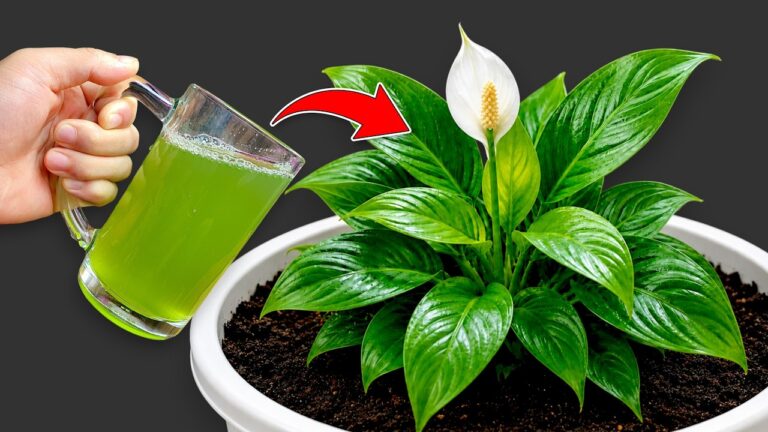

Simply put one tablespoon at the bottom of the pot! The hoya will bloom continuously.
# Simply put one tablespoon at the bottom of the pot! The hoya will bloom continuously.
## What the source actually does
The source gives several Hoya-care tips. It recommends an airy potting mix and mentions bark, perlite and peat. The transcript gives a confusing ratio around 70% and 30%, so it is safer not to present a precise formula. The key point is that the mix must drain and contain air.
For the homemade calcium treatment, the source uses the shells from 2 eggs. The white and yolk are removed, the shells are washed thoroughly, dried in sun or oven, and ground.
About 1 tablespoon of eggshell powder is placed in a container and covered with 1 liter of boiling water. The liquid is allowed to cool and may stand overnight. It is then filtered.
The source suggests two uses: mixing a small amount of dry powder into the potting mix during repotting or lightly top-dressing an established plant, and using the filtered liquid occasionally. It presents monthly use, alternating with other fertilizers.
It also recommends bright light near a window, some gentle morning sun, no harsh direct sun, and a room temperature around 20–24°C.
## Important reality check
Eggshell is mostly calcium carbonate. It dissolves very slowly in neutral water, so an eggshell-water infusion is not a precise or complete fertilizer. It supplies neither balanced nitrogen nor reliable potassium.
The source gives contradictory wording about keeping the soil moist and also letting it dry. A safer Hoya approach is to allow part of the mix to dry before watering again, while never leaving roots waterlogged.
Do not cut old Hoya flower spurs unless they are dead; many Hoyas rebloom from the same spur.
## Start with the plant, not the homemade recipe
Before using any household ingredient, inspect the plant itself. Check the roots, the newest leaves, the growing point, the pot, and the potting medium. A treatment is only useful if it solves a real problem.
For Phalaenopsis orchids, healthy roots are normally firm. When wet, many are green; when dry, many become silvery gray. A root that is mushy, hollow, black or foul-smelling should be treated as damaged even if part of it still has color.
Peace lilies, Hoyas and African violets have different root systems, but all can suffer when oxygen is excluded by permanently wet soil. Good drainage and an appropriately sized pot matter more than any kitchen infusion.
## Water according to real moisture
A monthly or fortnightly treatment schedule should never override the actual moisture in the pot. If orchid bark is still wet, wait. If a peace lily is drooping because it is dry, water it; if the soil is already wet, extra liquid may worsen root stress.
African violets prefer evenly managed moisture. Bottom watering can be useful, but the saucer should not remain full for hours. Once the root ball has absorbed water, remove the excess.
Hoyas generally tolerate some drying between waterings better than constantly saturated roots. The exact interval changes with temperature, pot size, light, and the type of mix.
## Light controls growth and flowering
A plant cannot use fertilizer efficiently in poor light. Phalaenopsis orchids usually need bright indirect light. Deep shade can produce leaves without flowers, while harsh midday sun can scorch foliage.
Peace lilies tolerate lower light than many flowering plants but bloom better in brighter filtered light.
African violets need bright indirect light to flower compactly. Too little light produces stretched leaf stems; too much direct summer sun can bleach or burn the foliage.
Hoyas often flower best with strong filtered light and may tolerate gentle morning sun. Sudden exposure to intense sun should be avoided.
## Homemade liquids are not complete fertilizer
Potato peels, banana peels, eggshells, garlic, orange peel, rice, turmeric and other kitchen ingredients contain various compounds, but their concentrations are unknown.
A commercial fertilizer has a labeled nutrient analysis. A homemade infusion does not. Two batches prepared with different fruit sizes, soaking times or water volumes can have very different concentrations.
Use homemade liquids, if at all, as optional experiments rather than as the only source of nutrition. Do not combine several homemade concentrates with a strong commercial fertilizer on the same day.
## Organic residues can grow microbes
Starch, fruit residue and garlic compounds can feed bacteria, yeasts, fungi and fungus-gnat larvae when they remain in a wet pot.
Filter every homemade liquid carefully. Solid peels, pieces of garlic or egg residue should not be left in orchid bark.
If a pot begins to smell sour, develops slime, shows mold or suddenly attracts many gnats, stop the treatment and flush with clean water.
Fresh mixtures are safer than old fermented ones. Do not keep unpreserved organic infusions at room temperature for long periods.
## Leaf treatments require caution
The easiest leaf-cleaning method is usually plain water on a soft cloth. Organic sprays can leave residues.
Never leave water in the crown of a Phalaenopsis. Water trapped between leaves can encourage crown rot.
African violet leaves are fuzzy and can develop spots when repeatedly wetted, especially with cold water. Bottom watering or careful edge watering is often safer.
If a source suggests spraying, test a small area first and make sure the plant dries quickly with good airflow.
## Pests and diseases need diagnosis
Aphids, thrips, mites, scale insects, mealybugs, fungal spots and bacterial rot are different problems. Garlic or turmeric water is not a universal treatment for all of them.
If pests are visible, isolate the plant and identify the pest. Use an appropriate mechanical, biological or labeled control method.
Yellow leaves can be caused by old age, root damage, excess water, drought, salts, sunburn or nutrient problems. Do not assume every yellow leaf needs more fertilizer.
## Repotting and root rescue
When repotting an orchid, remove only roots that are clearly dead or rotten. Healthy green or firm pale roots should be kept.
Use clean cutting tools. If a cut is made, keep it dry and allow airflow.
An airy medium such as coarse orchid bark is usually more appropriate for Phalaenopsis than dense soil. The pot should fit the remaining roots rather than the original plant size.
After severe root loss, reduce watering. A plant with few roots cannot use a large volume of water simply because its leaves look dehydrated.
## Temperature and seasonal signals
Temperature can affect flowering. Some Phalaenopsis respond to a period with cooler nights, provided the plant is healthy and temperatures remain within a safe range.
Do not expose tropical plants to cold wind, frost or abrupt temperature drops just to force flowering.
Peace lilies and African violets generally prefer stable indoor temperatures. Hoyas also grow best when protected from cold drafts.
## Pruning and flower spikes
Remove spent flowers when they are finished. Yellow or rotting leaves can be removed if they are truly declining.
Do not remove healthy leaves simply to “redirect energy.” Leaves are the plant’s photosynthetic reserves.
On Phalaenopsis, a completely brown flower spike can be cut. A green spike can sometimes produce a side branch, although this is not guaranteed.
On Hoya, old flower spurs should normally be left in place because many species rebloom from them.
## How to test a homemade method
Choose one plant and take a photo before the first application. Record the date, root condition and whether a flower spike is already present.
Change only one major variable at a time. If you repot, move the plant to a brighter window and add three homemade liquids on the same day, you will not know what helped.
Check again after two weeks and one month. A firm new root tip or a healthy new leaf is more meaningful than temporary leaf shine.
Stop if roots darken rapidly, the crown softens, the medium smells fermented or new leaf damage appears.
## Common mistakes
### Applying fertilizer to wet roots
This can extend the wet period and reduce oxygen.
### Using more because the plant is weak
A weak root system often tolerates less, not more.
### Expecting flowers in days
Flowering depends on plant maturity, light and seasonal conditions.
### Leaving organic solids in the pot
They decompose and can encourage microbes.
### Treating all spots as disease
Sunburn, mineral deposits and natural aging can look similar to infection.
## FAQ
### Can these methods replace commercial fertilizer?
No. They are optional, unstandardized supplements at most.
### Is vitamin B1 a rooting hormone?
No. It is not a proven rooting hormone for orchids.
### Does garlic water kill pests?
Not reliably enough to replace proper pest identification and control.
### How often should an orchid be watered?
When the plant and medium are sufficiently dry, not by a rigid calendar.
### What is the best sign of recovery?
New firm roots with active tips and a stable new leaf.
### Can I spray African violet leaves?
It is usually safer to keep fuzzy leaves dry and water from below or around the edge.
## Conclusion
The source methods contain useful care steps mixed with exaggerated claims. Keep the useful parts: inspect roots, prune genuinely dead tissue, use an airy medium, control moisture, provide bright indirect light and be patient. Treat kitchen infusions as experiments, not guaranteed fertilizers or cures.