
With just one cup, orchids develop vigorous roots and bloom continuously.
# With just one cup, orchids develop vigorous roots and bloom continuously.
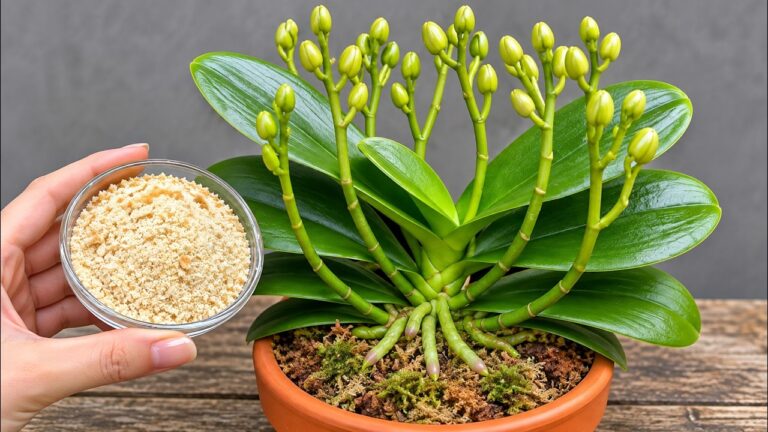
This article expands on the plant-care claim in the title without treating a household mixture as a guaranteed trigger for roots or flowers. Root health, light, watering, temperature and a suitable growing medium remain the main factors to assess.
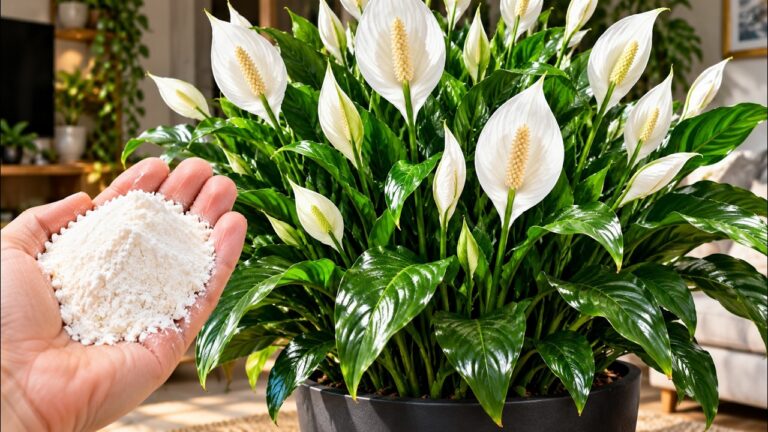
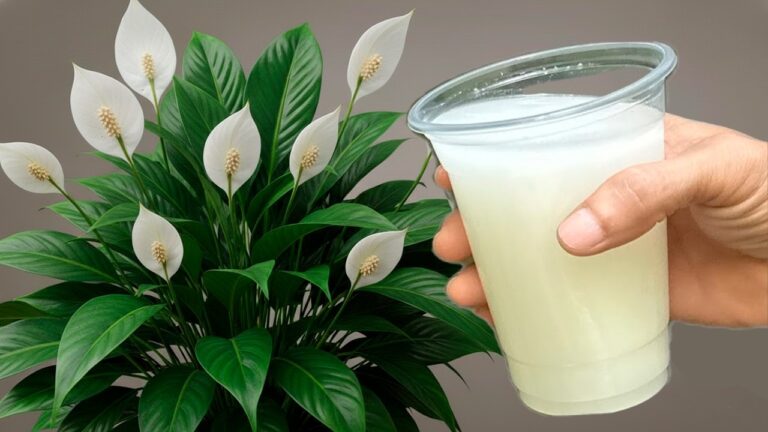
The title focuses on a peace lily and a weekly cup over a 30-day period. A visible change after a month can be interesting, but one treatment cannot by itself prove causation. Light, watering and root health remain essential.
## How to judge dramatic plant-care claims realistically
Titles built around “one cup,” “one spoon,” or a “magic” liquid are designed to sound simple, but flowering and root growth are never controlled by one ingredient alone. Light, temperature, root health, watering, substrate aeration, species and season all matter. A household mixture should therefore be treated as an optional experiment, not as a guaranteed trigger for roots, shoots or flowers.
Healthy plants begin with healthy roots. Roots need oxygen as well as moisture. Orchids generally perform best in an airy, free-draining medium rather than dense, permanently wet soil. African violets and peace lilies prefer different substrates, but neither benefits from standing water around the roots.
## Watering
Check the medium before watering. Do not water automatically on a rigid schedule if the pot is still wet.
Use room-temperature water and allow excess to drain away. Do not leave the inner pot standing in a decorative container filled with water.
With Phalaenopsis orchids, avoid leaving water in the crown. Persistent moisture in the growing point can encourage crown rot.
## Light
Insufficient light is often a more important reason for poor flowering than the absence of a homemade fertilizer.
Many orchids need bright, indirect light. Strong midday sun can scorch leaves. African violets also appreciate bright diffused light. Peace lilies tolerate lower light, but usually flower more reliably when they receive enough indirect light.
Move a plant gradually if you are increasing light exposure.
## Homemade fertilizers
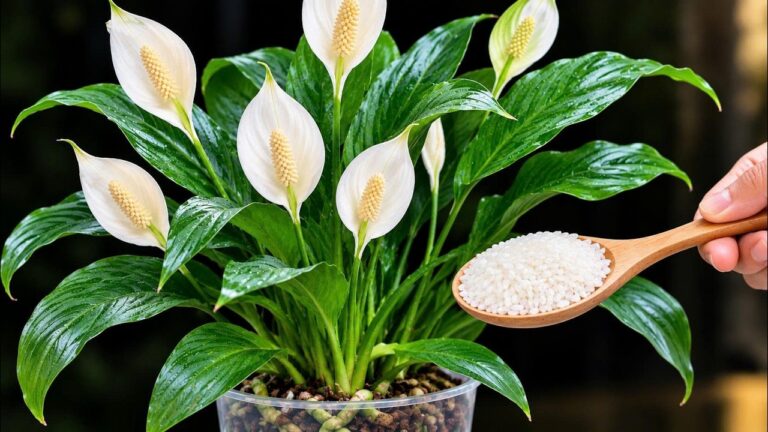
Rice water, potato water, banana-peel water, garlic water, coffee, eggshell preparations and similar kitchen remedies do not have standardized nutrient concentrations.
Starchy or sugary mixtures can also support microbial growth if they are stored or left in the pot.
If you choose to test them, use them fresh, cautiously and infrequently. They should not replace a balanced fertilizer.
For orchids, a weak soluble fertilizer is generally more predictable than kitchen leftovers. More fertilizer does not mean more flowers. Excess salts can damage root tips.
## No guaranteed flowering
Claims that a plant will grow “300 times faster,” bloom “instantly,” or flower continuously all year cannot be guaranteed.
Flowering depends on plant maturity, genetics, light, temperature and stored energy.
A weakened plant may need to rebuild roots and leaves before it can support flowers. Flower production is not always the best first goal during recovery.
## Root rot
Remove a plant from its pot mainly when there is a reason, such as black soft roots, a sour smell or a medium that stays wet for too long.
Use clean tools. Remove only clearly rotten tissue and keep firm healthy roots.
After major root loss, reduce watering because the plant has less capacity to absorb water.
For orchids, returning to a fresh airy medium is often safer than keeping the plant permanently in standing water. Water culture can be an experiment, not a universal solution.
## Leaf cleaning
Dust can be removed with a soft damp cloth.
Avoid sugary, starchy or oily leaf sprays. They can attract dust and support microorganisms.
On fuzzy leaves such as African violets, wet wiping is often unsuitable. Water sitting on the hairs can leave marks.
## Temperature
Stable indoor temperatures without cold drafts suit most houseplants.
Phalaenopsis orchids may respond to a moderate difference between day and night temperatures, but they are tropical plants and should not be chilled severely.
Do not place ice directly on tropical orchid roots.
## Old flower structures
Do not automatically remove every old structure.
Some plants can rebloom from old growth. Many Hoyas, for example, can flower again from existing spurs.
With orchids, whether to cut an old flower spike depends on species and the condition of the spike.
Remove dead, black or diseased tissue with clean tools.
## When not to use a home remedy
Do not use a mixture that smells sour, has become slimy, or shows mold.
Do not apply concentrated vinegar, lemon or garlic preparations directly to sensitive roots.
Avoid foliar sprays containing sugar or starch.
If the source does not provide an exact concentration, amount or frequency, do not invent precision. Use extreme caution or skip the method.
## A better way to test a tip
Change one variable at a time. Keep the light, pot and watering routine otherwise stable.
Observe the plant for several weeks.
Look for firm leaves, healthy root tips, stable growth and a clean-smelling medium.
If mold, odor, black roots or sudden wilting appear, stop the experiment.
Do not assume that a flower appearing after one treatment proves causation. Flower buds may have started developing much earlier.
## Common mistakes
### Watering too often
Roots lose oxygen and rot risk rises.
### Fertilizing too strongly
Salt damage can burn root tips.
### Keeping the plant too dark
It may survive without flowering.
### Trying a new kitchen remedy every week
You cannot tell what caused the change.
### Leaving food scraps in the pot
They can attract insects and microorganisms.
### Pushing a weak plant to flower
Root and leaf recovery should usually come first.
## FAQ
### Can one cup really cause flowering?
Not as a guaranteed effect. The plant must already have the resources to bloom.
### Is rice water a fertilizer?
It is not a standardized fertilizer.
### Is potato water safe?
Only cautiously and without salt or seasonings; it is not a replacement for normal plant nutrition.
### Does garlic water reliably control pests?
No. Correct pest identification and targeted control are more dependable.
### Should I fertilize more for more flowers?
No. Overfertilizing can harm roots and reduce plant health.
## Summary
Reliable houseplant care still depends on healthy roots, appropriate watering, enough light, a suitable substrate and restrained feeding. Household remedies can be treated as cautious experiments, but they should never be presented as guaranteed methods to make a plant bloom immediately, grow several hundred times faster or flower continuously throughout the year.
## A practical plant-check routine
Before trying a household remedy, inspect the plant. If roots are black and soft, address rot first. If the plant is kept in a dark corner, improve light before assuming that it needs a special tonic. If the medium has broken down and stays wet for many days, repotting into an appropriate airy mix may matter more than adding another liquid.
Avoid making several major changes at once. A plant recovering from repotting, root pruning or pests benefits from stable conditions. Strong fertilizer or repeated experimental additives can add stress.
Repot only when there is a reason such as decomposed medium, severe root crowding, rot or poor drainage. A much larger pot can hold excess moisture. After major root work, wait before applying strong fertilizer.
Humidity can help tropical plants, but high humidity without airflow can encourage fungal problems. Misting is not a substitute for proper watering, and fuzzy African-violet leaves should not be kept constantly wet.
Flowering takes time. Buds may have begun developing weeks before a visible change. Judge a method over a longer period rather than crediting one treatment immediately.
A good care method should be safe, repeatable and easy to monitor. If it causes odor, mold, leaf burn or root decline, stop using it.