Butter-Basted Cast Iron Ribeye with Garlic and Herbs
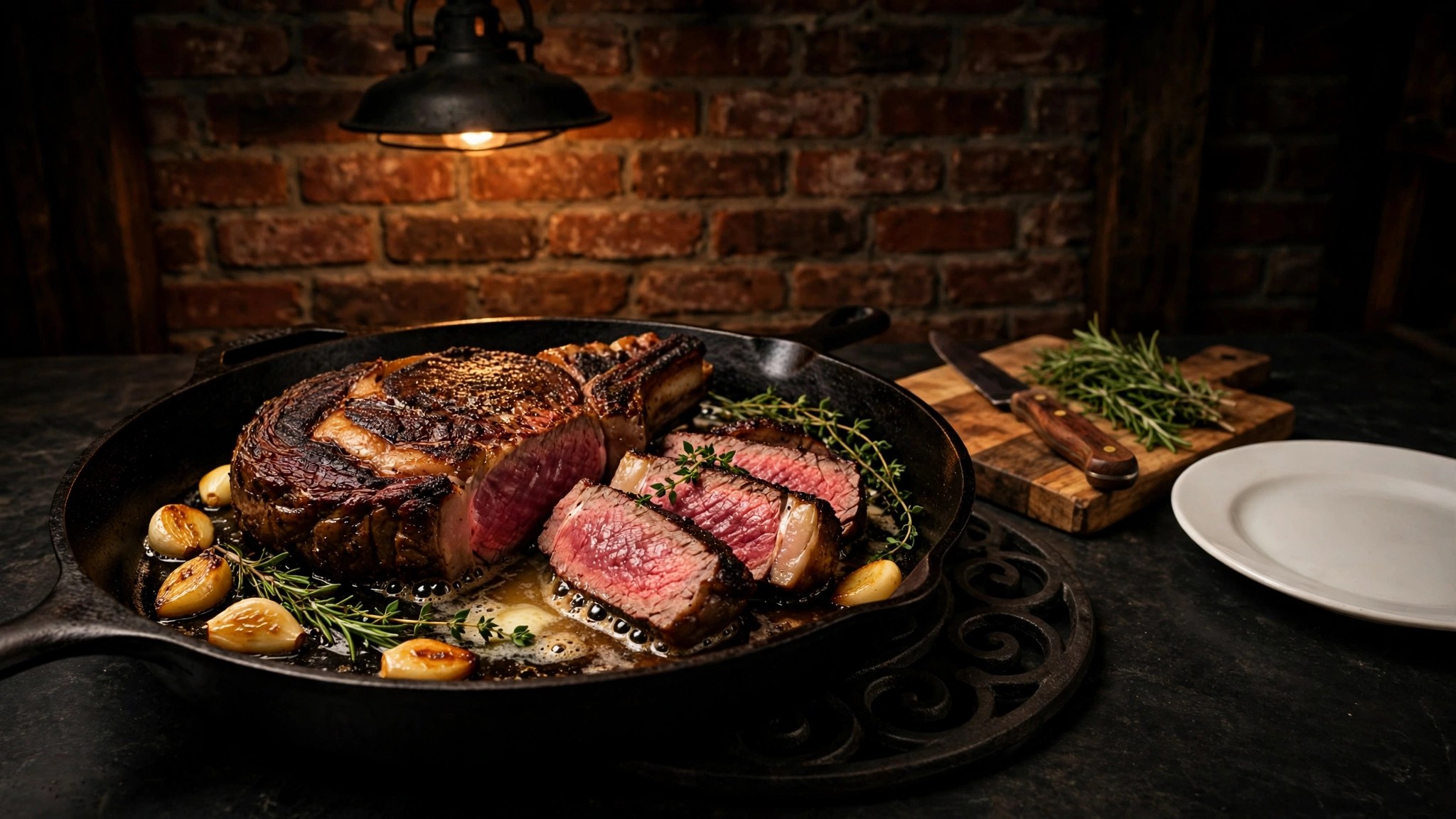
There is something special about a steak dinner at home during the holiday season, and this butter-basted ribeye delivers all the flavor of a fancy steakhouse with just a handful of ingredients. The ribeye is seasoned simply with salt and pepper, seared hard in a smoking-hot cast iron skillet, then bathed in foaming butter infused with whole garlic cloves and sprigs of fresh rosemary and thyme. That last step, spooning the hot butter over the meat again and again, builds a deeply browned, savory crust and keeps the inside tender and juicy.
Ribeye is the perfect cut for this method because its marbling melts as it cooks, so each bite stays rich and succulent. You do not need a grill or any special equipment beyond a heavy skillet and a good instant-read thermometer, which takes the guesswork out of hitting the doneness you love. It is an easy choice for a cozy date night, a small celebration or a festive dinner for two when you want something impressive without spending hours in the kitchen.
At a glance
- Prep time: 35 min
- Cook time: 15 min
- Servings: 2
Ingredients
- 1 boneless ribeye steak (about 12 ounces)
- 1 teaspoon sea salt
- 1/2 teaspoon black pepper
- 1 tablespoon avocado oil
- 2 tablespoons unsalted butter
- 3-4 cloves garlic
- 2 sprigs fresh rosemary
- 2 sprigs fresh thyme
Instructions
- Pat the steak dry on all sides with paper towels. Season it all over with the sea salt and black pepper, then let it rest at room temperature for 30 minutes so it cooks more evenly.
- Add the avocado oil to a cast iron skillet over medium-high heat. Heat until the oil shimmers, just starts to smoke and moves easily across the pan when you tilt it.
- Using tongs, carefully lay the steak in the hot pan, away from you. Sear for 1 minute, flip and sear the other side for 1 minute. Keep flipping the steak every 30 seconds until the center reaches about 100°F on an instant-read thermometer.
- Lightly crush the garlic cloves with the flat side of a knife. Add the butter, garlic, rosemary and thyme to the skillet.
- When the butter has melted and turned foamy, tilt the pan toward you so the butter pools with the garlic and herbs. Use a large spoon to baste the hot butter over the top of the steak several times, then flip the steak and baste the other side.
- Check the temperature and keep basting and flipping until the steak is about 5°F below your desired doneness: about 125°F for medium-rare or 135°F for medium, since it will keep cooking as it rests.
- Transfer the steak to a wire rack and let it rest for 10 minutes. Resting on a rack lets the drippings fall away so the crust stays crisp.
- Slice the ribeye against the grain into thick strips and spoon the garlic herb butter from the skillet over the top before serving.
Tips for success
- Dry the steak very well before seasoning; surface moisture creates steam and prevents a deep brown crust.
- Turn on the kitchen fan or open a window, because a properly hot cast iron skillet will smoke.
- Flipping often may sound unusual, but it helps the steak cook evenly from both sides and builds a uniform crust.
- Always slice against the grain, cutting across the visible lines of muscle, for the most tender bites.
Variations
This method works with other tender cuts such as New York strip, sirloin or a thick filet mignon; just adjust the cooking time and rely on your thermometer. If you only have dried herbs, add about 1/2 teaspoon of dried thyme and a pinch of dried rosemary to the butter instead of fresh sprigs. For a little heat, add a pinch of red pepper flakes with the garlic, or finish the sliced steak with flaky sea salt. Serve it with buttery mashed potatoes, roasted green beans, a baked potato or a crisp wedge salad for a classic American steak dinner.
Storage and reheating
Leftover steak keeps in an airtight container in the refrigerator for up to 3 days. To reheat without overcooking, warm the slices gently in a skillet over low heat with a little butter for 1 to 2 minutes, or enjoy them cold in a salad or a steak sandwich. Cooked steak can be frozen for up to 2 months, though the texture is best when eaten fresh.
Frequently asked questions
What temperature should a ribeye be for medium-rare?
Remove it from the pan at about 125°F. After resting, it rises to around 130°F, which is a juicy medium-rare.
Can I use salted butter?
Yes, but reduce the salt in the seasoning slightly so the finished steak is not too salty.
Why rest the steak on a wire rack?
On a rack the juices drip away instead of pooling under the meat, so the seared crust stays crisp while the steak rests.
A great steak at home really comes down to a few simple things: a dry, well-seasoned ribeye, a very hot cast iron skillet and plenty of garlic herb butter spooned over the top. With five main ingredients and about fifteen minutes at the stove, you get a crisp, deeply browned crust and a tender, rosy center every time. Keep this recipe handy for date nights, birthdays and festive winter dinners, and enjoy the steakhouse experience right at your own table.