Pineapple Upside-Down Skillet Cake, the Original Cast Iron Classic
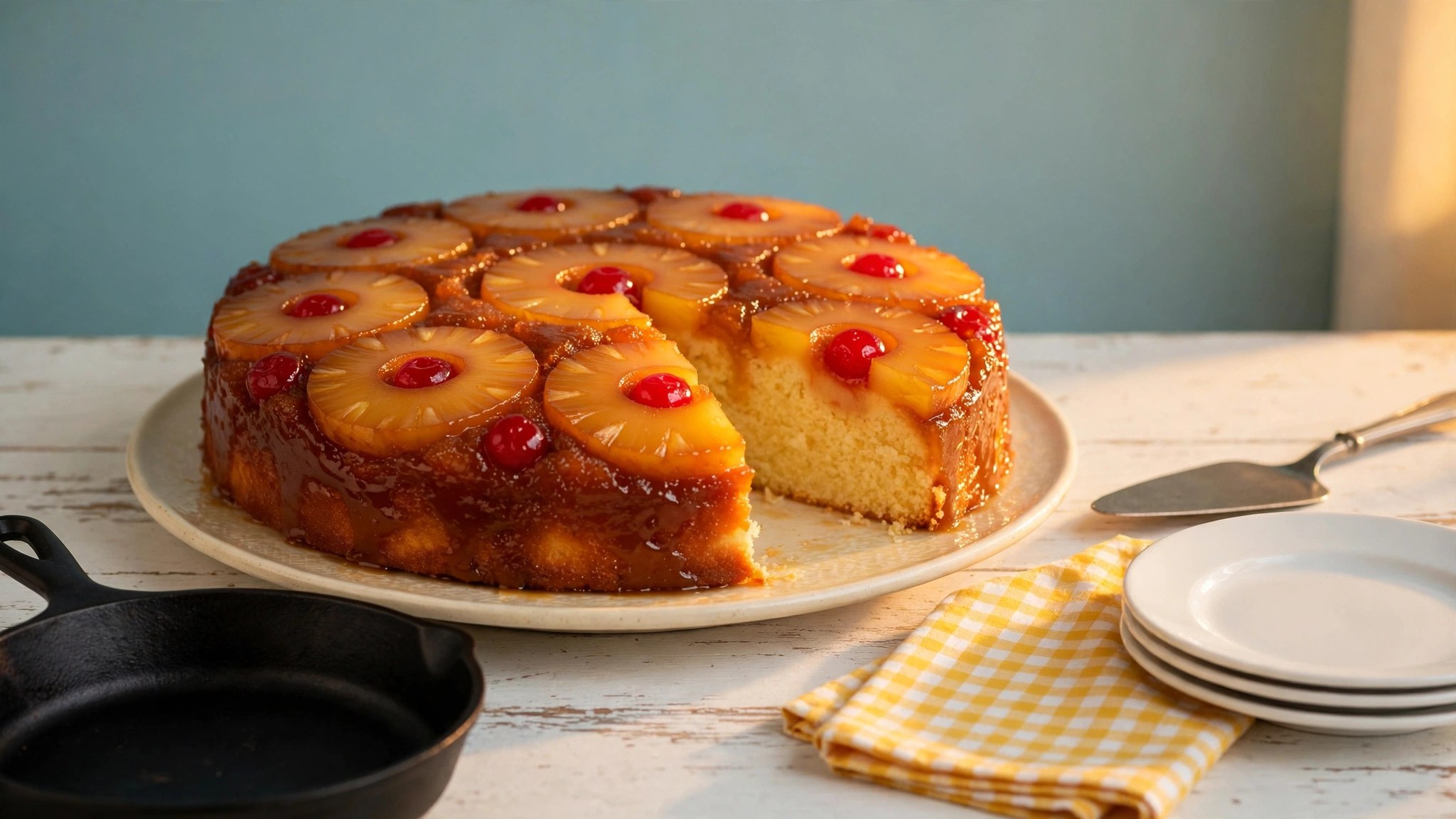
Pineapple upside-down cake became a national sensation in the 1920s, when canned pineapple rings first filled American pantries, and it has been a recipe box treasure ever since. The original was baked in a cast iron skillet, and that is still the best way to make it: butter and brown sugar melt right in the pan into a rich caramel, pineapple rings are laid on top, and a light vanilla butter cake is spooned over everything. After baking, one brave flip reveals glossy golden fruit, bright red cherries and caramel soaking into a soft, tender crumb.
This version keeps the old-fashioned method, including folding beaten egg whites into the batter for an extra light texture. It is a cheerful, colorful dessert for the long, dark evenings of late November and December, and it always draws a crowd at holiday potlucks and family dinners. Serve it warm from the oven, when the caramel is still glistening, or at room temperature with a cup of coffee. Few desserts look as festive with so little effort.
At a glance
- Prep time: 20 min
- Cook time: 45 min
- Servings: 10
Ingredients
Cake
- 1 2/3 cups all-purpose flour
- 2 teaspoons baking powder
- 3/4 teaspoon table salt
- 2 large eggs, yolks separated from whites, at room temperature
- 8 tablespoons unsalted butter, at room temperature
- 1 cup granulated sugar
- 1/2 cup milk, at room temperature
- 1 tablespoon pure vanilla extract
Topping
- 4 tablespoons butter, cold
- 3/4 cup light brown sugar or dark brown sugar, packed
- One 20-ounce can pineapple rings, drained
- 2 dozen maraschino cherries
Instructions
- Preheat the oven to 350°F. Lightly grease a 9-inch cast iron skillet that measures 9 inches across the bottom. A 9-inch square cake pan at least 2 inches deep also works.
- Measure the flour by gently spooning it into the cup and sweeping off the excess. Whisk the flour, baking powder and salt together in a bowl and set aside.
- Whisk the egg yolks in a small bowl and set them aside. In a separate clean bowl, beat the egg whites until light and frothy.
- In a large bowl, beat the room-temperature butter until soft and smooth. Gradually beat in the granulated sugar, then add the egg yolks and beat until combined. Scrape the bottom and sides of the bowl and beat again until smooth.
- Add the milk alternately with the flour mixture, mixing gently but thoroughly after each addition. Fold in the beaten egg whites, then the vanilla, until the batter is light and evenly mixed.
- For the topping, melt the cold butter directly in the skillet, then sprinkle the brown sugar evenly over the melted butter. Arrange the drained pineapple rings in a single layer on top of the sugar.
- Spoon the batter over the pineapple and spread it gently to the edges. Bake for 35 to 45 minutes, until a toothpick inserted in the center comes out clean.
- Run a knife around the edge to loosen the cake. Place a serving plate over the skillet and carefully turn it upside down, then lift the skillet off, scraping any pineapple or caramel left in the pan back onto the cake. Press the cherries gently into the warm cake, in the rings and between them, and serve warm or at room temperature.
Tips for success
- Pat the pineapple rings dry with paper towels before arranging them so the caramel stays thick and glossy instead of watery.
- Flip the cake within 5 minutes of taking it out of the oven. If it cools too long, the caramel hardens and sticks to the skillet.
- Use oven mitts and hold the plate firmly against the skillet with both hands when you flip, then lift the pan straight up.
- Dark brown sugar gives a deeper, more molasses-rich caramel, while light brown sugar keeps it golden and mild.
Variations
Fresh pineapple, cut into rings about half an inch thick, makes a brighter, tangier topping. For a holiday version, scatter fresh cranberries between the pineapple rings, or swap the pineapple for thin slices of apple or pear with a pinch of cinnamon in the brown sugar. A handful of chopped pecans sprinkled over the caramel adds a nice crunch. If you do not have cast iron, a 9-inch round or square cake pan at least 2 inches deep works well; melt the butter first and pour it into the pan before adding the sugar.
Storage and reheating
Keep the cake at room temperature, well covered with plastic wrap or under a cake dome, for up to 3 days. The caramel continues to soak into the crumb, so it stays moist. In a warm kitchen, you may prefer to refrigerate it; let slices come back to room temperature or warm them for a few seconds in the microwave before serving. For longer storage, wrap slices tightly in plastic wrap and foil and freeze for up to 2 months.
Frequently asked questions
Can I use pineapple chunks instead of rings?
Yes. Spread well-drained chunks in an even layer over the brown sugar. The cake will taste the same, though the classic ring pattern will be missing.
Why did my cake stick to the skillet?
It most often happens when the cake cools too long before flipping. Loosen the edges with a knife and turn it out while it is still hot.
Do I have to separate the eggs?
Folding in beaten egg whites makes the cake lighter, as in the original recipe. You can add whole eggs, but the crumb will be a little denser.
Pineapple upside-down cake is pure nostalgia baked in a skillet: golden fruit, ruby cherries and buttery caramel over a light, tender cake, revealed with one dramatic flip. It is easy enough for a weeknight treat and pretty enough for any holiday table. Dust off the cast iron, bake one this season, and watch this vintage favorite win over a whole new generation.