Dutch Baby Pancake (German Oven Pancake) with Crisp Golden Edges
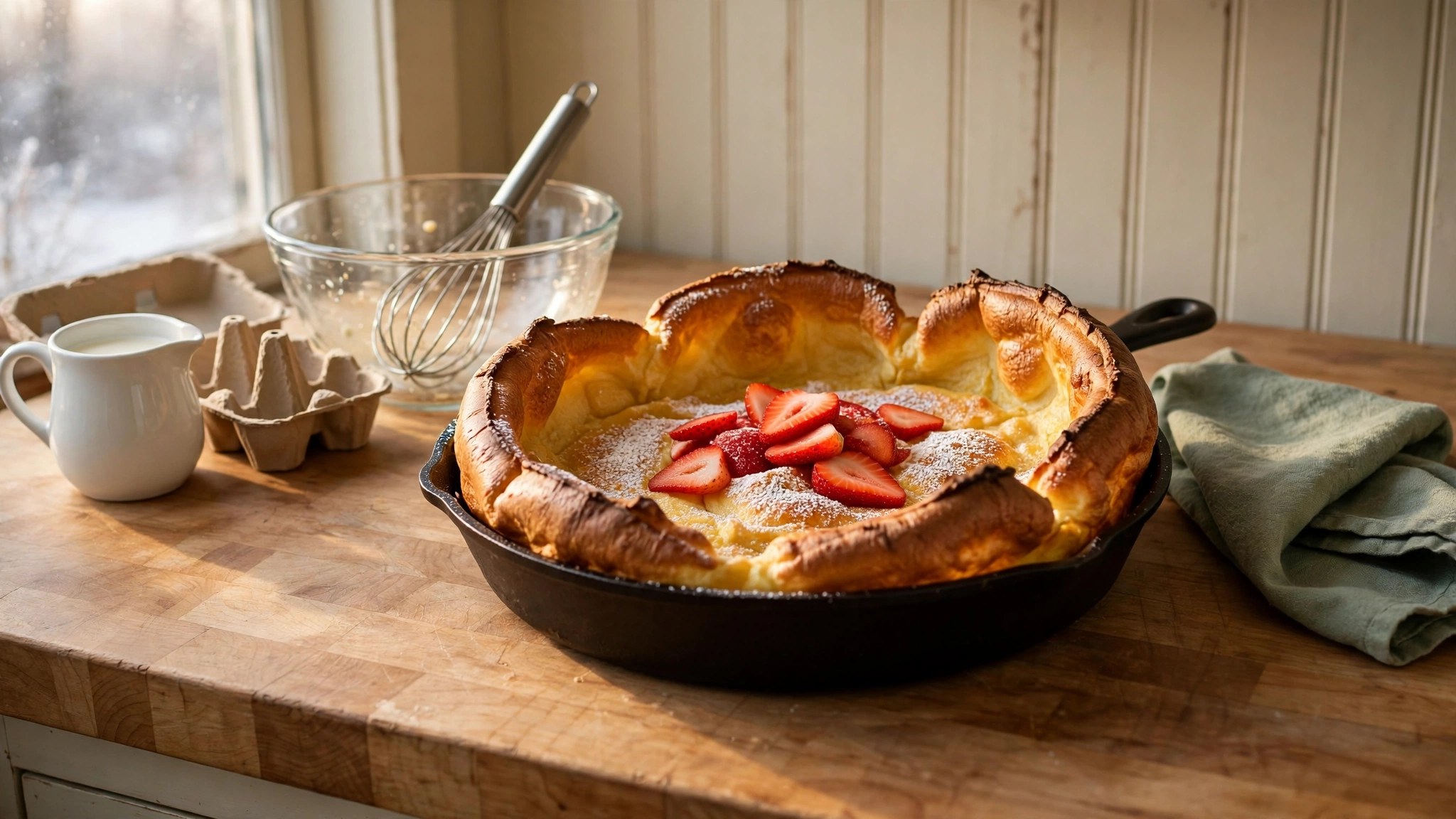
If you have never made a Dutch baby, you are in for a fun surprise. This German-style oven pancake starts as a thin, simple batter poured into a skillet of sizzling butter. In the hot oven it climbs up the sides of the pan, puffs high like a souffle and turns deep golden brown. When you pull it out, the edges are tall, crisp and ruffled, and the center is soft, flat and almost custardy. It looks impressive, but it takes only a few minutes of hands-on work.
The name has nothing to do with Holland: Dutch is usually explained as an old American twist on Deutsch, the German word for German. Whatever you call it, it is a wonderful choice for slow weekend mornings, holiday brunches and those cold December days when you want something warm from the oven. A touch of honey in the batter gives it a gentle sweetness, and a dusting of powdered sugar with fresh berries finishes it beautifully. Everything mixes in one bowl, so the cleanup is easy too.
At a glance
- Prep time: 10 min
- Cook time: 25 min
- Servings: 2
Ingredients
- 1/4 cup butter (or 1/4 cup hard margarine)
- 1 cup flour
- 1 pinch salt
- 1 tablespoon honey (or 1 tablespoon maple syrup)
- 1 cup milk
- 4 eggs
To serve (optional)
- Melted butter, powdered sugar and sliced fresh strawberries
Instructions
- Preheat the oven to 425°F. Place the cold butter directly in a 10-inch cast-iron skillet (or another heavy oven-safe skillet) and set the pan in the oven while it heats. The butter will melt and the pan will get very hot, which is the secret to a tall, puffy pancake.
- While the pan heats, make the batter. In a mixing bowl, stir together the flour, the pinch of salt, the honey and the milk until smooth.
- Beat in the eggs one at a time, mixing well after each one, until the batter is smooth, thin and slightly frothy. You can do this by hand with a whisk or with a hand mixer. A few tiny lumps are fine.
- Carefully take the hot skillet out of the oven. Swirl the melted butter so it coats the bottom and the sides, then pour all of the batter into the center of the hot pan right away.
- Return the skillet to the oven and bake for 25 minutes, without opening the door during the first 15 minutes. The pancake will puff up high around the edges and turn golden brown.
- Watch the last 6 minutes or so. If the top edges are browning faster than you like, reduce the heat to 350°F for the rest of the baking time.
- Take the skillet out of the oven. The pancake will collapse as it cools; don’t panic, this is exactly what is supposed to happen. The edges stay high and slightly crispy, while the inside becomes flat and eggy.
- Brush or drizzle with a little melted butter, dust with powdered sugar and top with sliced fresh strawberries. Cut into wedges and serve right away.
Tips for success
- Let the eggs and milk sit on the counter for 20 to 30 minutes before mixing; room-temperature batter puffs higher in the oven.
- Make sure the skillet is truly hot when the batter goes in. If the pan is only warm, the pancake will rise much less.
- Resist the urge to open the oven door early. A blast of cold air can stop the rise while the pancake is still setting.
- Serve it the moment it comes out of the oven, when the edges are at their crispiest.
Variations
For a cozy fall version, slice a tart apple thinly, soften it in the melted butter with a pinch of cinnamon before pouring in the batter, and bake as usual. In winter, top the pancake with a squeeze of fresh lemon juice and plenty of powdered sugar, or with warm blueberries, sliced bananas and a drizzle of honey. Maple syrup can replace the honey in the batter. For a larger crowd, bake two pancakes in two skillets side by side, or use a 9×13-inch baking dish, keeping an eye on the baking time.
Storage and reheating
A Dutch baby is best eaten fresh from the oven, while the edges are crisp. Leftovers can be covered and kept in the refrigerator for up to 2 days. Reheat slices in a 350°F oven for 5 to 8 minutes to bring back some of the crispness; the microwave works too, but the pancake will be softer. We don’t recommend freezing it, because the texture becomes soggy once thawed.
Frequently asked questions
Why didn’t my Dutch baby puff up?
The most common reason is a pan or oven that was not hot enough. Preheat the skillet with the butter inside, pour the batter in quickly and keep the oven door closed for the first part of the baking.
Can I make it without a cast-iron skillet?
Yes. Any heavy oven-safe skillet or a round metal cake pan works. Cast iron simply holds the heat best and gives the crispiest edges.
Is a Dutch baby the same as a German pancake?
Yes, the two names describe the same dish: a large egg-rich pancake baked in the oven that rises high and then settles as it cools.
With just a few pantry staples, this Dutch baby turns an ordinary morning into a small celebration. The tall crisp edges, the soft custardy middle and the sweet berries on top make it feel like a special brunch, yet it comes together in about half an hour. Bring the skillet straight to the table, cut it into wedges and enjoy it while it is still warm and golden.