5 Easy Spring Tasks to Ensure a Bountiful Asparagus Harvest
5 Easy Spring Tasks to Ensure a Bountiful Asparagus Harvest
As spring arrives, it’s the perfect time to prepare your garden for a thriving asparagus harvest. While asparagus might be available in stores all year, nothing compares to the fresh, sweet taste of homegrown asparagus. Here are five essential tasks to ensure your asparagus patch flourishes for years to come.
1. Prune Back Last Year’s Growth
The first step is to prune back any last year’s growth. Use hedge trimmers or pruners to cut the old stems as close to the crown as possible. You can compost or shred this growth to use as mulch around the asparagus bed.
If you pruned and mulched your asparagus last fall, consider letting some old growth remain through winter. This natural mulch can help keep the ground insulated, and it may even self-seed, giving you new plants with minimal effort.
2. Weeding
Weeding is crucial for maintaining a healthy asparagus bed. Asparagus has a shallow root system, making it easy to disturb the plants when uprooting weeds. Early spring is the best time to remove young weeds while the soil is still damp.
Be cautious when pulling up weeds near the crown, especially perennial weeds like Bermuda grass, which can have extensive root systems.
3. Fertilize
Your asparagus has been waiting patiently all winter for the warm weather to return. Now is the time to apply a good dose of all-purpose fertilizer, preferably a liquid option that provides nutrients immediately where they’re needed—at the roots.
Asparagus requires a significant amount of phosphorus each season, so consider adding bone meal around the crowns for optimal growth.
4. Top Dress with Compost
Finish your preparation by lightly top-dressing the asparagus bed with compost. Over the years, your asparagus patch can last up to thirty years, so it’s vital to enrich the soil annually. Adding compost will gradually break down, providing essential nutrients throughout the growing season.
5. Mulch
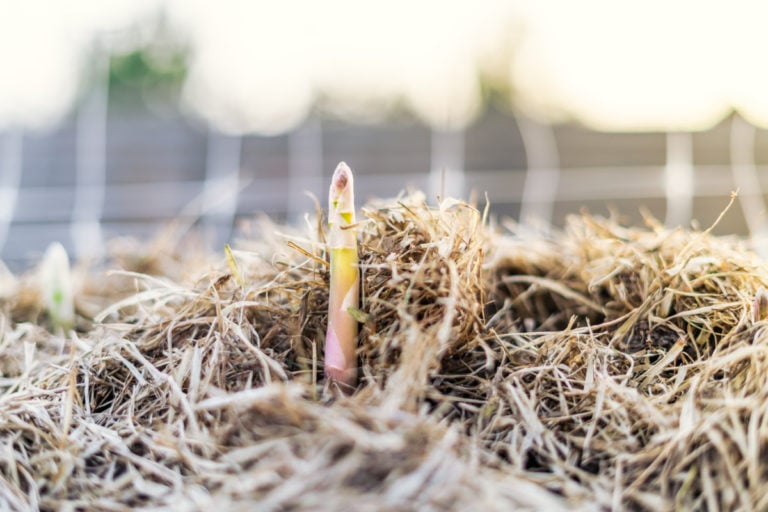
After grooming the asparagus bed with the necessary amendments, consider laying down a layer of mulch. This will help keep weeds at bay, ensuring that your asparagus crowns remain undisturbed.
If you saved the old growth from pruning, shred it with a lawnmower to create mulch. Alternatively, you can use straw, dried grass clippings, or explore 19 different mulches you can use in your garden for more options.
Conclusion
Now that you’ve completed these important spring tasks, it’s time to relax. Set up your lawn chair next to the asparagus patch and patiently wait for those first green spears to emerge. And don’t forget to have a fork and butter ready to enjoy the fruits of your labor!