6 Carrot Pests You Must Know and How to Eliminate Them
6 Carrot Pests You Must Know and How to Eliminate Them
Experiencing the taste of a freshly harvested carrot is an unparalleled delight! With their sweet crunch and vibrant colors, it’s no wonder carrots are a popular choice in home gardens. However, they can be vulnerable to various insect pests that threaten your yield. Here’s what you need to know to protect your carrot crop.
4 Ways to Prevent Carrot Pests
1. Till in the Fall
Many pests that attack carrots lay eggs or go dormant in the soil during winter, waiting to emerge in spring and summer. To combat this, clean up your garden in the fall. Gather spent plants for compost, till the soil, and leave it exposed for local wildlife to help devour pests and their eggs. If you have chickens or ducks, let them roam the garden during this time for additional pest control.
2. Introduce Beneficial Insects
Not all insects are harmful; many are beneficial for your garden. Ladybugs, lacewings, and parasitic wasps can assist in controlling destructive pests that threaten your carrots. Attract these helpful insects by planting:
- Buckwheat
- Sunflower
- Yarrow
- Dill
- Black-eyed Susans
- Cosmos
- Marigold
- Coneflower/Echinacea
- Mint
- Borage
- Chamomile
- Nasturtiums
Note: Avoid purchasing insects online, as they may disrupt your local ecosystem. Instead, promote the growth of native beneficial insects.
3. Use Floating Row Covers
To physically keep pests at bay, consider using floating row covers. These lightweight barriers made from wire hoops and fabric protect your delicate crops from insect attacks. Ensure the covers are sealed to the ground to prevent pests from infiltrating from below. However, be sure to leave plants that need insect pollination uncovered.
4. Practice Companion Planting
Companion planting is a natural way to shield your crops from pests. Pairing carrots with aromatic plants can deter pests like the carrot fly. Good companions include:
- Mint
- Onion
- Leeks
- Parsley
- Sage
- Rosemary
- Chives
- Nasturtiums
Common Carrot Pests
If you discover an infestation, timely identification of the pest is crucial for effective treatment. Here are some common pests that target carrots:
1. Cutworms
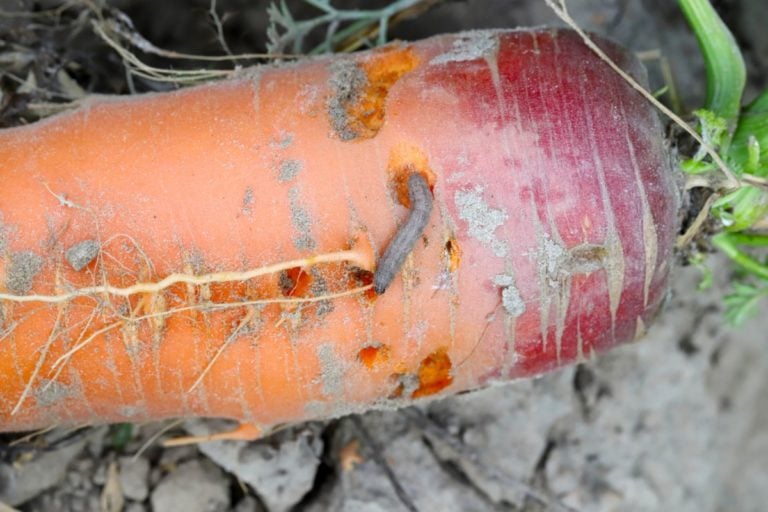
These common garden pests can sever your plants’ stems at the surface. If you suspect cutworms, check your garden in the evening. Use gloved hands to feel around the soil—if you find any, dispose of them in soapy water. Maintain weed-free gardens and consider using collars around your carrot plants for protection.
2. Aphids
Aphids favor young carrot plants and can transmit diseases. Control them by spraying water jets onto the leaves. If the infestation persists, use neem oil for a more thorough treatment.
3. Carrot Rust Fly
This pest poses a severe threat to carrots, especially during spring and fall. Adult flies aren’t harmful, but their larvae burrow into carrots, causing rust-colored holes. Set yellow sticky traps at soil level to monitor for adult flies. Using row covers and practicing crop rotation can further deter these pests.
4. Carrot Weevils
Beetles that consume carrot leaves and lay eggs in roots, weevils can damage your crop significantly. To control them, practice crop rotation and set traps using cut carrots to capture their larvae. Additionally, neem oil can help eliminate any remaining larvae.
5. Wireworms
Known for tunneling into plants, wireworms can persist in the soil for years. Rotate your carrot crop annually and set traps using carrots buried in the soil. Check frequently and remove any captured pests.
6. Celery Worms/Carrot Caterpillar
This caterpillar, the larva of the black swallowtail butterfly, enjoys feeding on carrot tops. Handpicking and relocating them to another area will help protect your crops while still allowing butterflies to pollinate your garden.
Conclusion
Understanding and managing carrot pests is essential for a thriving garden. With the preventive measures and treatments outlined above, you can minimize pest problems and enjoy better carrot yields year after year. Take these steps today to ensure your carrot crops flourish!