6 Basil Growing Troubles and Their Quick Fixes
6 Common Basil Growing Troubles and Their Quick Fixes
Basil is a beloved annual herb, essential in Italian cuisine and popular in dishes from Thailand to Vietnam. With over 60 varieties, including some with vibrant red or purple leaves, sweet basil remains the favorite for cooking. Unfortunately, basil leaves—the star of the show—can often fall victim to various issues. Here’s a guide on how to identify and fix common basil problems.
1. Leggy Plants
Causes and Solutions
- Too Much Fertilizer: While basil can benefit from fertilizer, overdoing it can lead to leggy plants with reduced flavor. Always follow fertilizer instructions closely.
- A Drop In Temperature: Basil prefers warm conditions. Plant after the last frost and consider growing in containers that can be moved inside during cold snaps.
- Not Enough Sunlight: Basil thrives in 6-8 hours of sunlight. If grown indoors, ensure adequate light or relocate to a sunnier spot.
- Incorrect Watering Or Lack Of Drainage: Carefully balance moisture to avoid over or under-watering. Regularly check soil drainage and water when the top layer feels dry.
- Lack Of Regular Pruning Or Harvesting: Regularly trim basil to promote bushiness and prevent flowering, which can make leaves bitter.
2. Yellow Leaves
Causes and Solutions
- Lack Of Nutrients: Yellow leaves often indicate a deficiency in nitrogen. Introduce compost or nitrogen-rich fertilizer.
- Watering: Either under or overwatering can cause yellowing. Ensure the soil is moist but not waterlogged to avoid root rot.
- Fungal Infections: Inspect for root rot and treat accordingly. Downy mildew may also be a culprit; remove infected leaves and apply copper-based fungicide.
- Nematodes: These pests impact the roots, leading to yellowing foliage. Unfortunately, you may need to replace affected plants with resistant varieties.
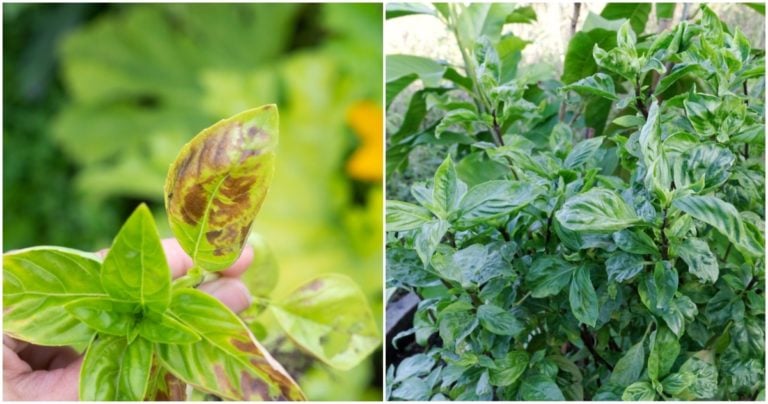
3. Black and Brown Spots
Causes and Solutions
- Frost: Sensitive to cold, frost can damage basil. Plant later in the season or cover with frost protection when necessary.
- Fungal Infection: Black spots often indicate fungal issues. Maintain good air circulation and sunlight; use fungicide if necessary.
- Inadequate Nutrients: Balance nitrogen levels in the soil with organic compost to prevent brown spots.
4. Transparent Spots or Translucent Leaves
Causes and Solutions
- Pests: Insects like spider mites and aphids suck chlorophyll, leading to transparent spots. Use appropriate insecticides or a soapy water solution.
- Temperature Fluctuations: Cold drafts stress basil. Ensure indoor plants are shielded from chilly air, or consider grow lights for indoor use.
- Overwatering: Limit watering to avoid soft stems and translucent leaves, ensuring proper drainage.
- Fungal Infections: Problems like Leaf Spot can cause transparency and require careful pruning and treatment with fungicide.
- Nutrient Deficiencies: A nitrogen deficiency or low iron can lead to translucent leaves. Test soil pH and amend as needed.
5. Curling Leaves
Causes and Solutions
- Lack Of Light: Ensure basil receives at least 4-5 hours of sunlight daily. Consider grow lights for indoor plants.
- Lack Of Water: Maintain consistent watering to prevent dry soil and curling leaves.
- Sucking Insects: Pests like aphids can cause stress leading to curl. Use neem oil or insecticidal soap to treat infestations.
6. Wilting Leaves
Causes and Solutions
- Pests: Check for spider mites, aphids, and whiteflies, which can sap vitality from your plants.
- Fusarium Wilt: This damaging fungal disease leads to yellowing and wilting. Infected plants should be removed and disposed of.
- Leaf Spot: Commonly causes wilting; remove infected leaves promptly to prevent spreading.
- Root Rot: Caused by overwatering, leading to wilting. Repot with fresh soil and cut any damaged roots.
Conclusion
With the right attention and care, you can easily overcome common issues faced by basil plants. By identifying the symptoms early and implementing the appropriate solutions, you can ensure a bountiful harvest of fresh, flavorful basil to enhance your culinary delights.