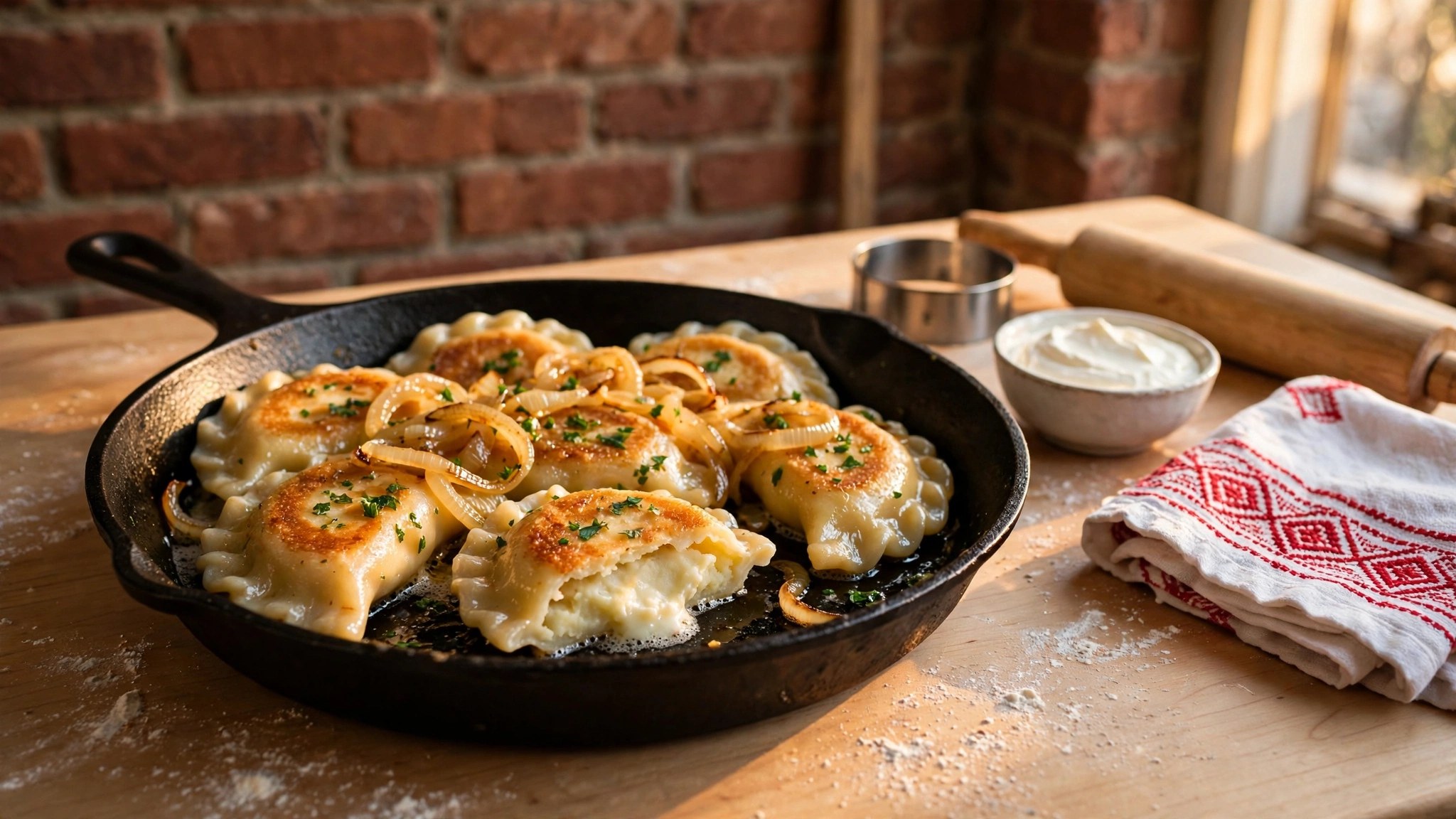
Homemade Pierogi with Creamy Potato Filling and Buttery Onions
In cities like Pittsburgh, Chicago, Cleveland and Milwaukee, pierogi are more than a side dish: they are part of the family story. Brought to America by Polish and Eastern European immigrants, these little half-moon dumplings became a beloved comfort food served at church festivals, holiday dinners and Christmas Eve tables. Every family seems to have a busia, or grandma, whose pierogi were simply the best, and making a big batch together on a winter afternoon is a tradition many still keep.
This version is wonderfully approachable. The dough comes together in a food processor, the filling is a fluffy mix of riced potatoes, sweet sautéed onions and softened cream cheese, and the finished dumplings are boiled briefly before being pan-fried in butter with more onions. The result is golden and lightly crisp on the outside, soft and tender in the middle, with a creamy, savory filling that tastes like the coziest bowl of mashed potatoes. One batch makes about six dozen, so there is plenty to share or freeze for later.
At a glance
- Prep time: 60 min
- Cook time: 5 min
- Servings: 72
Ingredients
Dough
- 5 cups all-purpose flour
- 1 teaspoon salt
- 1 cup water
- 3 large eggs, room temperature
- 1/2 cup butter, softened
Filling
- 4 medium potatoes, peeled and cubed
- 2 medium onions, chopped
- 2 tablespoons butter
- 5 ounces cream cheese, softened
- 1/2 teaspoon salt
- 1/2 teaspoon pepper
For each serving
- 1/4 cup chopped onion
- 1 tablespoon butter
- Minced fresh parsley
- Sour cream, optional
Instructions
- Place the flour and salt in a food processor and pulse to blend. Add the water, eggs and softened butter, then pulse until the dough forms a ball. If it seems dry, add 1 to 2 tablespoons more water; if it is sticky, add a little more flour. Cover and let the dough rest for 15 to 30 minutes.
- Put the potatoes in a large saucepan, cover with cold water and bring to a boil over high heat. Lower the heat, cover and simmer until fork-tender, 10 to 15 minutes. Meanwhile, sauté the onions in the butter in a large skillet over medium-high heat until tender.
- Drain the potatoes and return them to the pot over very low heat, stirring for 1 to 2 minutes until the steam has evaporated. Press them through a potato ricer or strainer into a large bowl, then stir in the cream cheese, salt, pepper and sautéed onions.
- Divide the dough into four parts. On a lightly floured surface, roll one portion to 1/8-inch thickness and cut out circles with a floured 3-inch biscuit cutter. Re-roll the scraps to make more circles.
- Place 2 teaspoons of filling in the center of each circle. Brush a little water around the outer edge, fold the dough over the filling and pinch the edges firmly to seal. Repeat with the remaining dough and filling.
- Fill a Dutch oven halfway with water and bring it to a boil. Add the pierogi in batches, reduce to a gentle simmer and cook until they float to the top and are tender, 1 to 2 minutes. Lift them out with a slotted spoon.
- For each serving, sauté four pierogi with 1/4 cup chopped onion in 1 tablespoon butter in a large skillet until lightly browned and heated through. Sprinkle with parsley and serve with sour cream if you like.
Tips for success
- Dry the boiled potatoes in the pot for a minute or two before ricing them. Less moisture means a fluffier filling that will not make the dough soggy.
- Let the filling cool before shaping. Warm filling softens the dough and makes it more likely to tear when you fold it.
- Seal the edges well and press out any air pockets so the pierogi do not burst while they simmer.
- Keep the rolled dough you are not using covered with a towel so it stays soft and easy to pinch closed.
Variations
For an extra-cheesy Midwestern twist, stir about half a cup of shredded cheddar into the warm potato filling along with the cream cheese. You can also add a spoonful of chopped fresh chives or dill to the filling for a brighter, herby flavor. If you prefer a deeper, sweeter flavor, cook the onions for the topping slowly until they are deeply caramelized before adding the pierogi. Serve them alongside a crisp green salad or roasted vegetables for a complete meatless dinner, or as a hearty side next to roast chicken during the holidays.
Storage and reheating
Uncooked pierogi freeze beautifully. Arrange them in a single layer on a floured baking sheet, freeze until firm, then transfer them to freezer bags and store for up to three months; boil them straight from the freezer, adding a minute or two to the cooking time. Boiled pierogi can be cooled, tossed with a little melted butter so they do not stick, and refrigerated in an airtight container for up to three days. Reheat them by sautéing in butter with onions until golden and hot all the way through.
Frequently asked questions
Can I make the dough without a food processor?
Yes. Mix the ingredients in a bowl with a wooden spoon, then turn the dough out onto the counter and knead it by hand until smooth.
How do I know when the pierogi are cooked?
They are ready when they float to the surface of the simmering water and feel tender, which usually takes only 1 to 2 minutes.
Do I have to pan-fry them?
No, you can serve them simply boiled with melted butter, but pan-frying with onions adds golden color and a lovely light crispness.
Homemade pierogi take a little time, but every minute is worth it. Rolling, filling and pinching a big batch is a cozy weekend project for the whole family, and the reward is a freezer full of golden, buttery dumplings ready whenever comfort food is needed. Make them for a holiday gathering, serve them with a dollop of sour cream, and start a tradition of your own.