Old-Fashioned Butterscotch Pie with Toasted Meringue
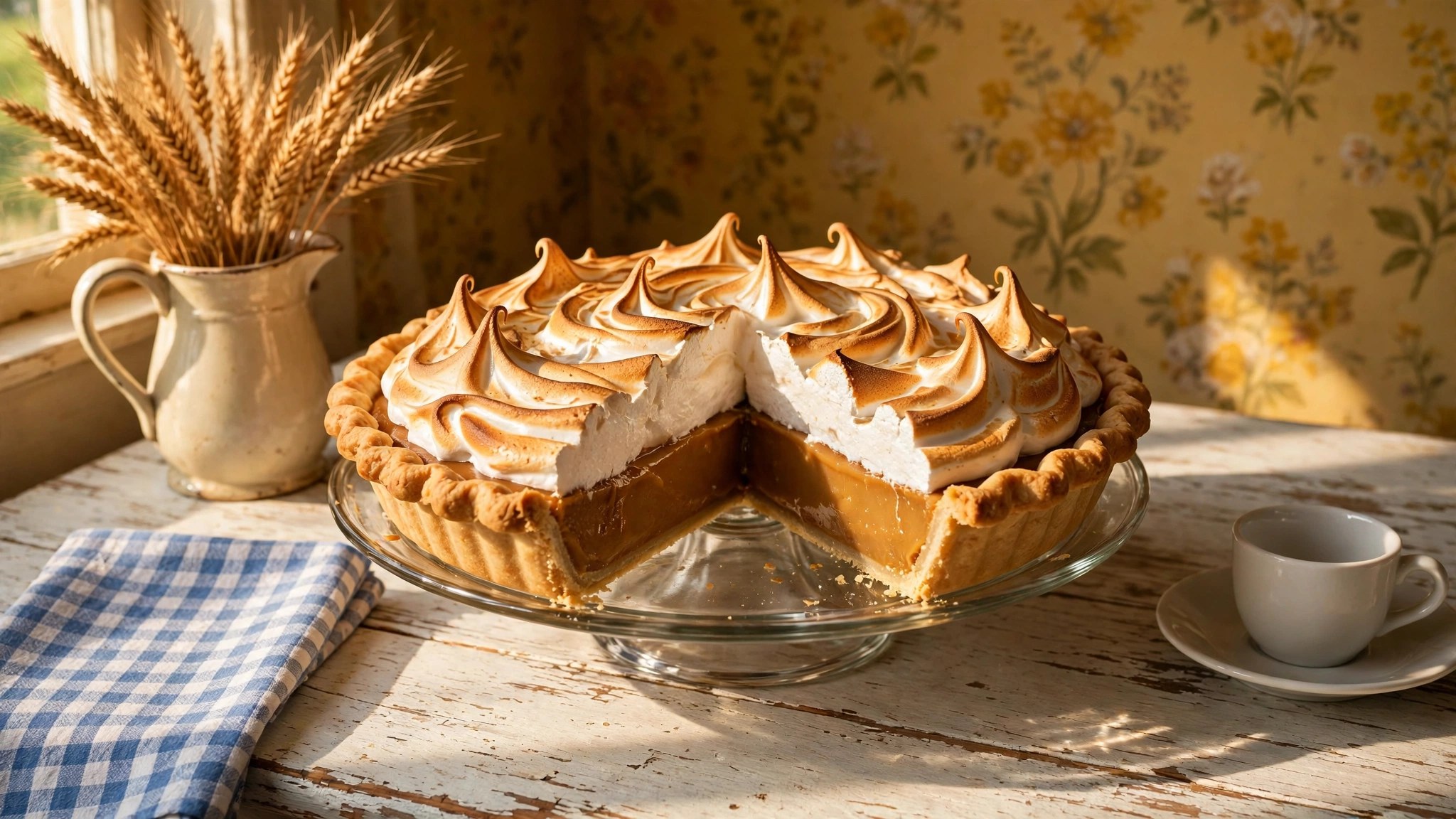
Butterscotch pie is one of those old-fashioned American desserts that deserves a comeback. It was a staple of church suppers, diners and grandma’s holiday table, and one bite explains why. The filling is a rich, smooth custard made from butter, brown sugar, milk and egg yolks, cooked on the stove until thick and glossy. It tastes deeply of caramel and vanilla, without being heavy, and it sets into a creamy layer that slices cleanly.
On top goes a tall, fluffy meringue made from the leftover egg whites, so nothing goes to waste. A short bake toasts the peaks to a beautiful golden brown, giving every slice that classic diner look. If your Thanksgiving or Christmas menu already has pumpkin and pecan covered, butterscotch pie is a wonderful change of pace. It is made with simple pantry ingredients, and it can be prepared hours ahead, since it needs time in the refrigerator to set.
At a glance
- Prep time: 30 min
- Cook time: 15 min
- Servings: 8
Ingredients
Pie
- Dough for single-crust pie
- 6 tablespoons butter
- 6 tablespoons all-purpose flour
- 1-1/2 cup packed brown sugar
- 2 cups whole milk
- 1/4 teaspoon salt
- 3 large egg yolks, room temperature, beaten
- 1 teaspoon vanilla extract
Meringue
- 3 large egg whites, room temperature
- 1/4 teaspoon cream of tartar
- 1/2 cup sugar
Instructions
- On a lightly floured surface, roll the dough into a circle about 1/8 inch thick. Transfer it to a 9-inch pie plate, trim the edges to 1/2 inch beyond the rim and flute them. Refrigerate the crust for 30 minutes. Preheat the oven to 425°F.
- Line the unpricked crust with a double layer of aluminum foil and fill it with pie weights, dried beans or uncooked rice. Bake on a lower oven rack until the edges are light golden brown, 15 to 20 minutes. Remove the foil and weights and keep baking until the bottom is golden brown, 3 to 6 minutes longer. Cool on a wire rack and reduce the oven to 350°F.
- In a saucepan, melt the butter. Take the pan off the heat, add the flour and whisk until smooth, then whisk in the brown sugar. Return the pan to the heat and whisk in the milk and salt until blended. Cook and whisk over medium-high heat until the mixture is thickened and bubbly. Reduce the heat and cook, whisking, for 2 minutes longer.
- Remove the pan from the heat. Slowly pour about 1 cup of the hot mixture into the beaten egg yolks while whisking constantly, so the yolks warm up gently. Pour the egg mixture back into the saucepan, whisking all the time.
- Bring the filling to a gentle boil and cook, whisking, for 2 minutes longer. Remove from the heat, gently whisk in the vanilla and pour the hot filling into the baked crust.
- For the meringue, beat the egg whites and cream of tartar in a clean, dry bowl on medium speed until soft peaks form. Gradually add the sugar, about 1 tablespoon at a time, beating on high speed until stiff, glossy peaks form and the sugar has dissolved.
- Spread the meringue evenly over the hot filling, sealing it all the way to the edge of the crust. Swirl it with the back of a spoon to create peaks.
- Bake until the meringue is golden brown, 12 to 15 minutes. Cool the pie on a wire rack at room temperature for 1 hour, then refrigerate for at least 3 hours before serving.
Tips for success
- Spread the meringue over the filling while it is still hot. The heat helps cook the bottom of the meringue and prevents weeping.
- Seal the meringue right up to the crust all around the pie, so it does not shrink away from the edges in the oven.
- Make sure your mixing bowl and beaters are perfectly clean and dry; even a trace of fat keeps egg whites from whipping.
- Dip your knife in hot water before each cut so the meringue does not stick and the slices stay neat.
Variations
For a deeper flavor, use dark brown sugar instead of light, or brown the butter before adding the flour. A pinch of flaky sea salt over the filling before the meringue turns it into a salted butterscotch pie. If you prefer, skip the meringue and top the chilled pie with lightly sweetened whipped cream just before serving. A graham cracker or vanilla wafer crust also pairs very well with the creamy filling, and the same custard can be spooned into small glasses as a simple butterscotch pudding.
Storage and reheating
Refrigerate leftovers, loosely covered, for up to 3 days. Meringue pies are best on the first or second day, since the meringue slowly softens in the fridge. Avoid wrapping plastic directly on the meringue, which would stick to it; instead, place a few toothpicks in the top and drape the wrap over them. This pie does not freeze well, because both the custard and the meringue change texture when thawed.
Frequently asked questions
Why is my meringue weeping?
Usually the sugar was not fully dissolved or the meringue was spread on a cool filling. Add the sugar slowly, beat until glossy and spread it over the hot custard.
Is butterscotch the same as caramel?
They are close cousins. Caramel is made from white sugar, while butterscotch relies on brown sugar and butter, which gives it a softer, toffee-like flavor.
Can I use a store-bought crust?
Yes. A refrigerated or frozen crust works fine; just blind bake it until golden before adding the filling.
Old-fashioned butterscotch pie is simple, comforting and a little nostalgic, with a silky brown sugar custard and a cloud of golden meringue. It is a lovely way to bring something different to the holiday dessert table. Bake it in the morning, let it chill, and serve it to a crowd that will be glad you brought this classic back.