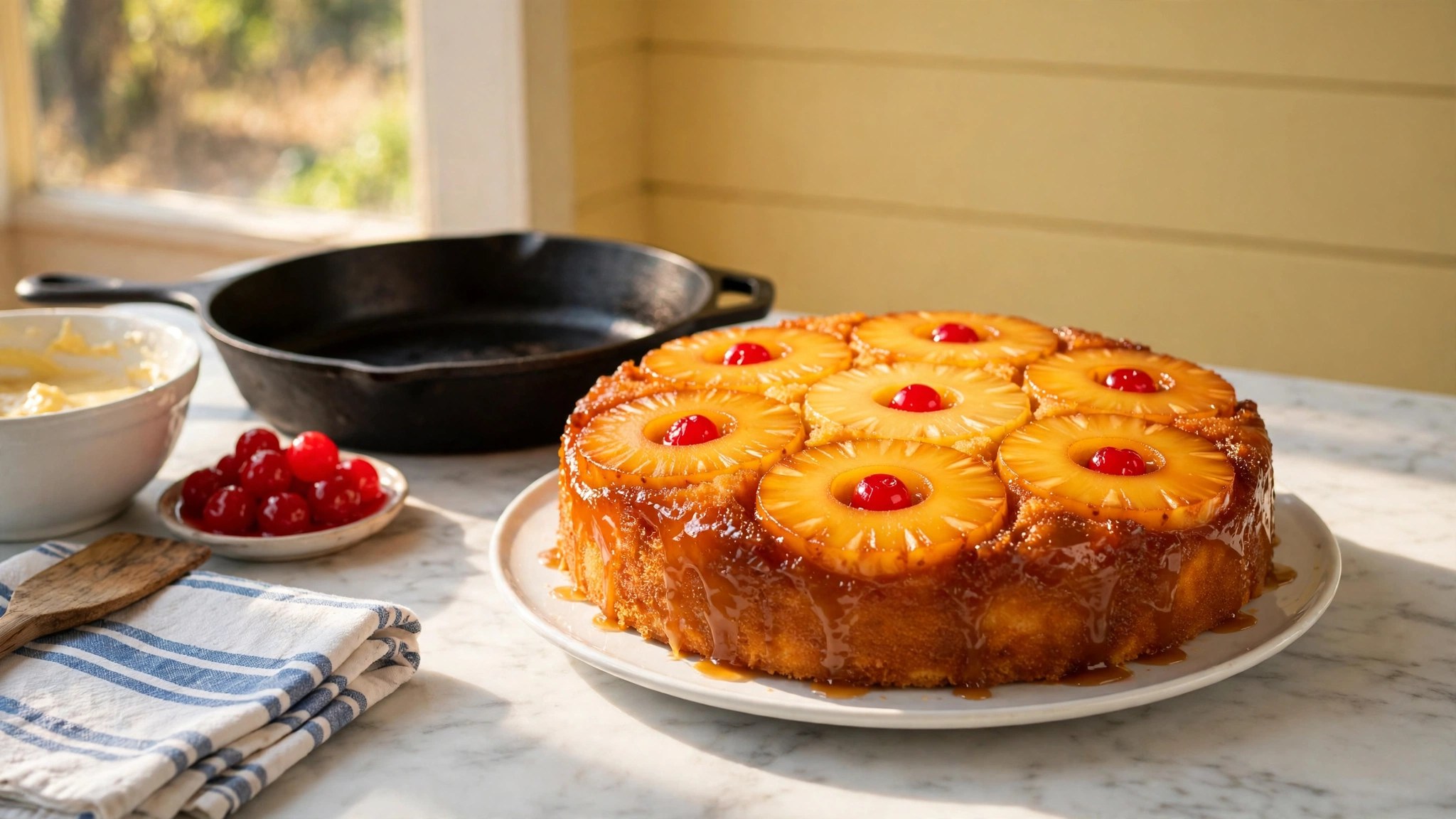
Original Pineapple Upside-Down Skillet Cake in Cast Iron
Few desserts are as cheerful as a pineapple upside-down cake. When it comes out of the skillet and you lift the pan away, the whole table usually lets out a little cheer. Glossy brown sugar caramel covers golden pineapple rings, with bright red cherries tucked into the centers, and underneath sits a soft, fluffy vanilla butter cake. This dessert became a favorite in American kitchens in the 1920s, when canned pineapple rings first appeared in grocery stores, and home cooks quickly learned to bake it in the trusty cast-iron skillet they already used every day.
This version stays true to that original skillet method. The butter and brown sugar melt right in the pan, the pineapple rings go on top, and a light batter is spooned over everything. The secret to the airy texture is an old-fashioned step: the egg whites are beaten separately and folded in at the end, which makes the crumb tender and light. The cast iron gives the edges a beautiful caramelized crust. It is a lovely dessert for a holiday table or a cozy weekend dinner, and it looks as impressive as any bakery cake with very little effort.
At a glance
- Prep time: 20 min
- Cook time: 45 min
- Servings: 10
Ingredients
For the cake
- 1 2/3 cups (200g) unbleached all-purpose flour
- 2 teaspoons baking powder
- 3/4 teaspoon table salt
- 2 large eggs, yolks separated from whites, at room temperature
- 8 tablespoons (113g) unsalted butter, at room temperature, at least 65°F
- 1 cup (198g) granulated sugar
- 1/2 cup (113g) milk, at room temperature
- 1 tablespoon (14g) pure vanilla extract
For the topping
- 4 tablespoons (57g) butter, cold
- 3/4 cup (160g) light brown sugar or dark brown sugar, packed
- One 20-ounce (567g) can pineapple rings, drained
- 2 dozen maraschino cherries
Instructions
- Preheat the oven to 350°F. Lightly grease a 9-inch cast-iron skillet (it should measure 9 inches across the bottom). You can also use a lightly greased 9-inch square cake pan that is 2 inches deep.
- Weigh the flour, or measure it by gently spooning it into a cup and sweeping off the excess. Whisk the flour, baking powder and salt together in a bowl and set aside.
- Whisk the egg yolks in a small bowl and set them aside. In a separate clean bowl, beat the egg whites until light and frothy.
- In a large bowl, beat the room-temperature butter until soft and smooth. Gradually beat in the granulated sugar. Add the egg yolks and beat well, then scrape the bottom and sides of the bowl and beat again until smooth.
- Add the milk alternately with the flour mixture, mixing gently but thoroughly after each addition. Fold in the beaten egg whites, then the vanilla, until the batter is light and even.
- For the topping, melt the cold butter in the skillet and sprinkle the brown sugar evenly over it. Arrange the drained pineapple rings in a single layer on top of the sugar.
- Spoon the batter over the pineapple and spread it gently to the edges. Bake for 35 to 45 minutes, until a toothpick inserted into the center comes out clean.
- Remove the skillet from the oven and loosen the edges with a knife. Carefully turn the cake upside down onto a serving plate and lift off the skillet. Scrape any pineapple or caramel that sticks back onto the cake.
- Place the maraschino cherries in the centers of the rings and in the gaps, pressing them gently into the warm cake. Serve warm or at room temperature.
Tips for success
- Pat the pineapple rings dry with paper towels before arranging them, so the caramel stays thick and glossy instead of watery.
- Flip the cake within a few minutes of taking it out of the oven. If the caramel cools too much, it will stick to the pan.
- Use oven mitts and a plate slightly larger than the skillet, and turn it over in one quick, confident motion.
- Dark brown sugar gives a deeper, more molasses-like caramel; light brown sugar gives a softer, honey-colored topping.
Variations
For a fall twist, add a pinch of cinnamon or ginger to the brown sugar topping. You can replace some of the pineapple rings with thin slices of fresh pineapple, or tuck pecan halves into the spaces between the rings for a little crunch. Fresh cranberries scattered among the rings make a festive holiday version with a tart contrast. If you do not have a cast-iron skillet, a 9-inch square cake pan works well; the edges will be a little softer. Some bakers replace a few tablespoons of the milk with pineapple juice from the can for more fruity flavor.
Storage and reheating
Pineapple upside-down cake is best the day it is baked, while the caramel is still glossy. Store leftovers at room temperature, well wrapped, for up to 2 days, or in the refrigerator for up to 4 days. Warm individual slices for a few seconds in the microwave to soften the caramel again. For longer storage, wrap slices tightly and freeze them for up to 2 months, then thaw at room temperature.
Frequently asked questions
Why is my cake sticking to the skillet?
The caramel probably cooled too long. Flip the cake within about five minutes of baking. If it sticks, warm the skillet briefly over low heat and try again.
Can I use fresh pineapple?
Yes. Cut it into rings about 1/2 inch thick and remove the core. Fresh pineapple is juicier, so pat it well dry.
Do I have to separate the eggs?
Beating the whites separately gives the classic light, fluffy crumb. You can add whole eggs, but the cake will be a little denser.
This original pineapple upside-down skillet cake is pure vintage charm: a golden butter cake, a shiny caramel top and the jewel colors of pineapple and cherries. It is simple enough for a weeknight and pretty enough for a holiday table. Bake it in your cast-iron skillet, flip it with confidence, and enjoy the moment everyone sees that beautiful caramel top.