A simple spoonful! The routine to know for a ZZ plant ready to produce new shoots
A simple spoonful! The routine to know for a ZZ plant ready to produce new shoots
A ZZ plant can look perfectly respectable while doing almost nothing that you can see. Its leaves stay glossy, its stems stay upright, and the empty space around the base remains empty for weeks. When that pause follows repotting or a move, adding a spoonful of something feels like a practical way to get growth started again.
The useful routine begins before anything goes into the pot. Check what changed, decide whether the plant is healthy, and make its conditions predictable. ZZ plants store water and reserves in underground rhizomes, so their visible growth does not follow the same rhythm as a fast-growing vine. A thoughtful adjustment can help; repeated attempts to force a response often make the situation harder to understand.
Decide whether the plant is resting or declining
Look at the entire plant rather than searching only for a new shoot. Firm leaf stalks, stable color, and a potting mix without a sour smell are reassuring. A plant that looks much the same over several weeks may simply be growing slowly. That is different from one whose lower sections are softening or whose leaves are yellowing in quick succession.
Take a photograph now, including the base of the plant. Memory is unreliable when changes are small. Compare future pictures from roughly the same angle instead of digging around the rhizomes to see what is happening. New growth can begin below the surface before it becomes obvious above it.
If the plant is deteriorating, investigate promptly. A wet, heavy pot combined with soft tissue calls for a root and watering assessment. A dry pot after prolonged neglect calls for a different response. Neither situation is diagnosed by the absence of new leaves alone.
Reconstruct the changes that came before the pause
Think back to the last few weeks. Was the plant moved away from a window, transferred to a much larger pot, or divided into smaller pieces? Did someone begin watering it more frequently? Changes that seem minor to a person can substantially alter the environment around the roots.
Write down the main event and its approximate date. A newly divided plant may spend time establishing roots before producing obvious foliage. A plant moved into a darker room may remain attractive but grow more slowly. These explanations are more useful than assuming every pause means a missing nutrient.
Consider who cares for the plant. If two people water it independently, the actual schedule may be twice as frequent as either person realizes. A simple note beside the watering can prevents accidental duplication. Consistent information is part of consistent plant care.
Check whether the new pot suits the remaining roots
Repotting into an oversized container can leave a small root system surrounded by a large volume of damp mix. The surface may look dry while the middle stays wet. Choosing a bigger pot does not automatically give a recovering plant a better start.
Inspect the drainage holes and remove any standing water from the outer decorative container. A layer of stones inside a closed pot does not provide an exit for water. For straightforward household care, use an inner pot that drains freely and can be lifted out whenever you water.
Do not repot again merely because growth has not resumed immediately. Another disturbance may add stress without solving anything. Consider intervention when there is a clear mismatch in pot size, damaged roots, or a mix that remains unsuitable. Keep healthy roots and firm rhizomes intact whenever possible.
Give the roots a complete drink followed by drying
ZZ plants need a substantial drying period between waterings. Check below the surface and learn the weight of the pot as it dries. A calendar reminder can tell you when to inspect, but it should not automatically trigger a watering session.
When watering is needed, moisten the root ball evenly and let excess water escape. Empty the saucer or outer pot afterward. Tiny daily additions can keep one part of the mix wet without telling you much about the rest. A complete, well-drained watering is easier to assess.
After repotting, relearn the drying pattern. Fresh mix, a different container, and a changed amount of root material can alter the interval. Do not place the plant beside a heater to accelerate drying. Fix the underlying container or watering problem rather than replacing it with heat stress.
Improve light without suddenly exposing the leaves
A ZZ plant can tolerate lower light, but that does not make a dim corner ideal for producing new shoots. Look at its location during daylight. A room that feels bright to you may provide relatively little light several feet from the window.
Choose a brighter position with indirect light if growth has stalled in a dark spot. Make the transition gradually, particularly if strong sunlight reaches the new location. Leaves accustomed to shade can develop damaged patches after sudden exposure through hot glass.
Keep the plant away from cold drafts and direct heating or cooling vents. A steady location makes watering easier to judge. Once you have selected a suitable spot, allow time for adjustment instead of moving the pot around the house every few days.
Treat a spoonful as a measurement, not a cure
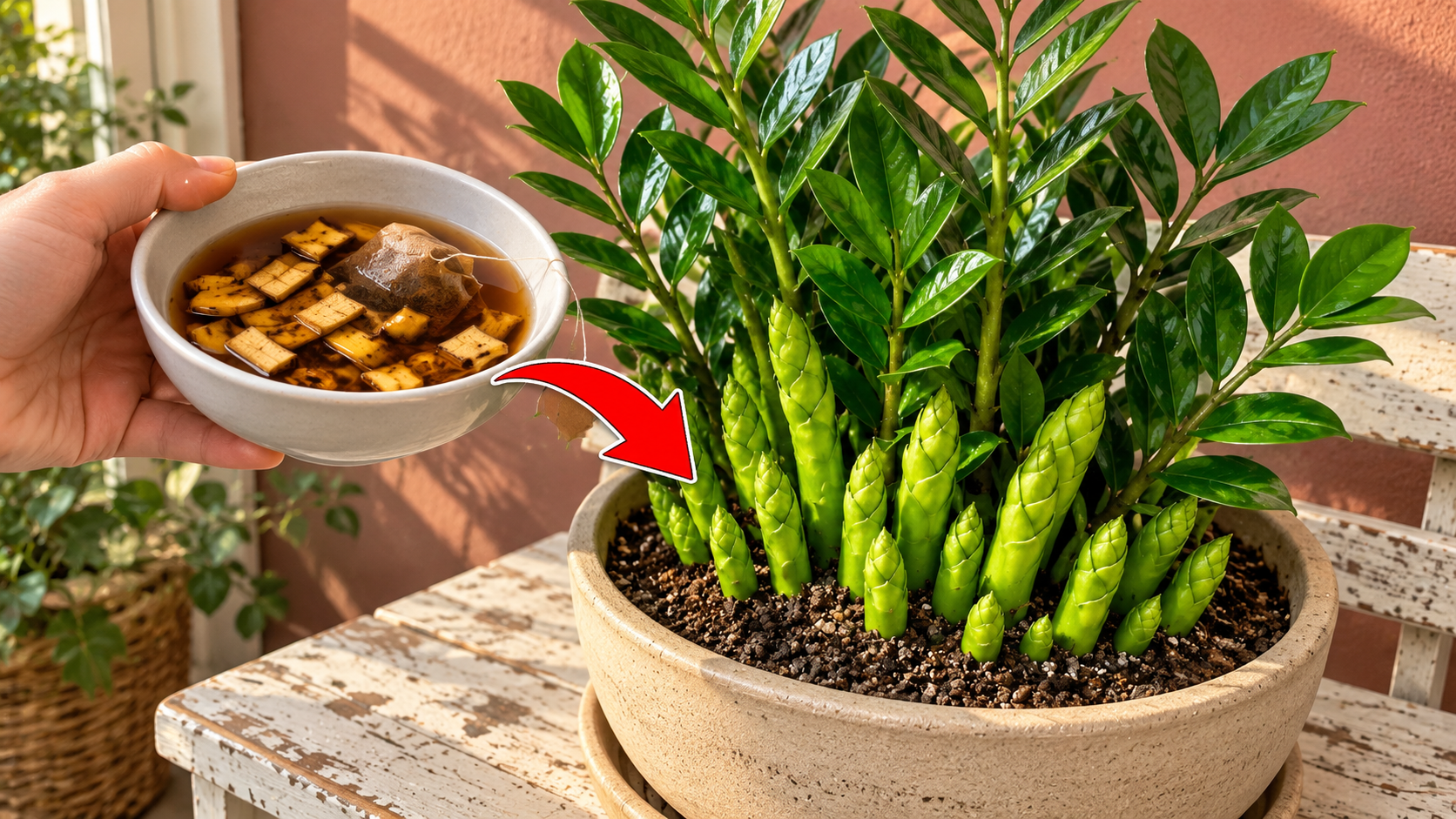
Banana-and-tea mixtures are sometimes offered as simple plant boosters. Their strength, nutrient availability, and behavior in potting mix are not standardized. A spoonful therefore does not tell you what the roots receive. Food residues are not necessary for a ZZ plant to recover from a move or repotting.
If the plant is healthy and actively growing, an appropriate houseplant fertilizer used according to its label can support that growth. Check whether fresh potting mix already contains fertilizer before adding more. Measure the product as directed; do not substitute an arbitrary kitchen spoon for a manufacturer’s measuring system.
Hold off on feeding a plant with suspected root damage or persistent waterlogging. Fertilizer cannot restore rotten tissue or compensate for insufficient light. Increasing the concentration because the first application produced no immediate shoot is particularly unhelpful. Growth is a process, not a test of how much product the plant can tolerate.
Care for the leaves while the plant settles
Dust can be removed with a soft, slightly damp cloth. Support each leaf as you wipe so the stalk is not pulled sideways. Oils, milk, and polishing products are unnecessary. The purpose is clean foliage, not an artificially shiny surface.
While cleaning, check the undersides and the points where leaflets attach. Sticky residue, cottony material, or visible insects deserve closer identification. Keep a plant with a suspected pest problem separate from other houseplants until you understand what is present. Avoid applying several unrelated sprays as a guess.
A young ZZ shoot may look paler than mature foliage as it develops. Do not pry apart folded leaflets or bury the emerging tip under extra mix. Let the shoot expand naturally. If it needs room, move nearby objects rather than bending the tender growth away from them.
Use a follow-up plan that reveals actual progress
Choose one or two observations to track: whether yellowing has stopped, how long the mix takes to dry, and whether a new shoot appears. Make notes when you water or feed. These records help separate a genuine improvement from the excitement of having tried something new.
Change the main limiting condition first. If the plant was in deep shade, improve its light and monitor water use. If it was constantly wet, address drainage and watering. Avoid introducing a new mix, supplement, location, and spray simultaneously unless an urgent problem makes several actions necessary.
Remember that a stable plant can be recovering even before it makes a visible shoot. A large established specimen and a small recent division will not respond at the same speed. Let the plant establish a pattern under good conditions before deciding that another intervention is required.
Common questions about a ZZ plant that seems stuck
Should I cut healthy leaves to encourage new ones?
Removing healthy foliage is not a useful general solution for slow growth. Keep firm green leaves and remove fully dead material carefully. If you want to reshape a large plant, that is a separate decision from treating a plant that may be stressed.
Can I water extra before leaving on a trip?
Do not saturate the pot repeatedly to build a reserve. Water according to the actual moisture level before leaving and provide clear instructions if someone will check the plant. The rhizomes already help it manage intervals between waterings.
How soon should a new shoot appear?
There is no reliable deadline for every ZZ plant. Look for stability first and visible growth later. If the plant continues to decline, investigate instead of waiting indefinitely. If it remains healthy, patience is part of the routine that gives future shoots a better chance.
Further reading: University of Florida Gardening Solutions, ZZ plant