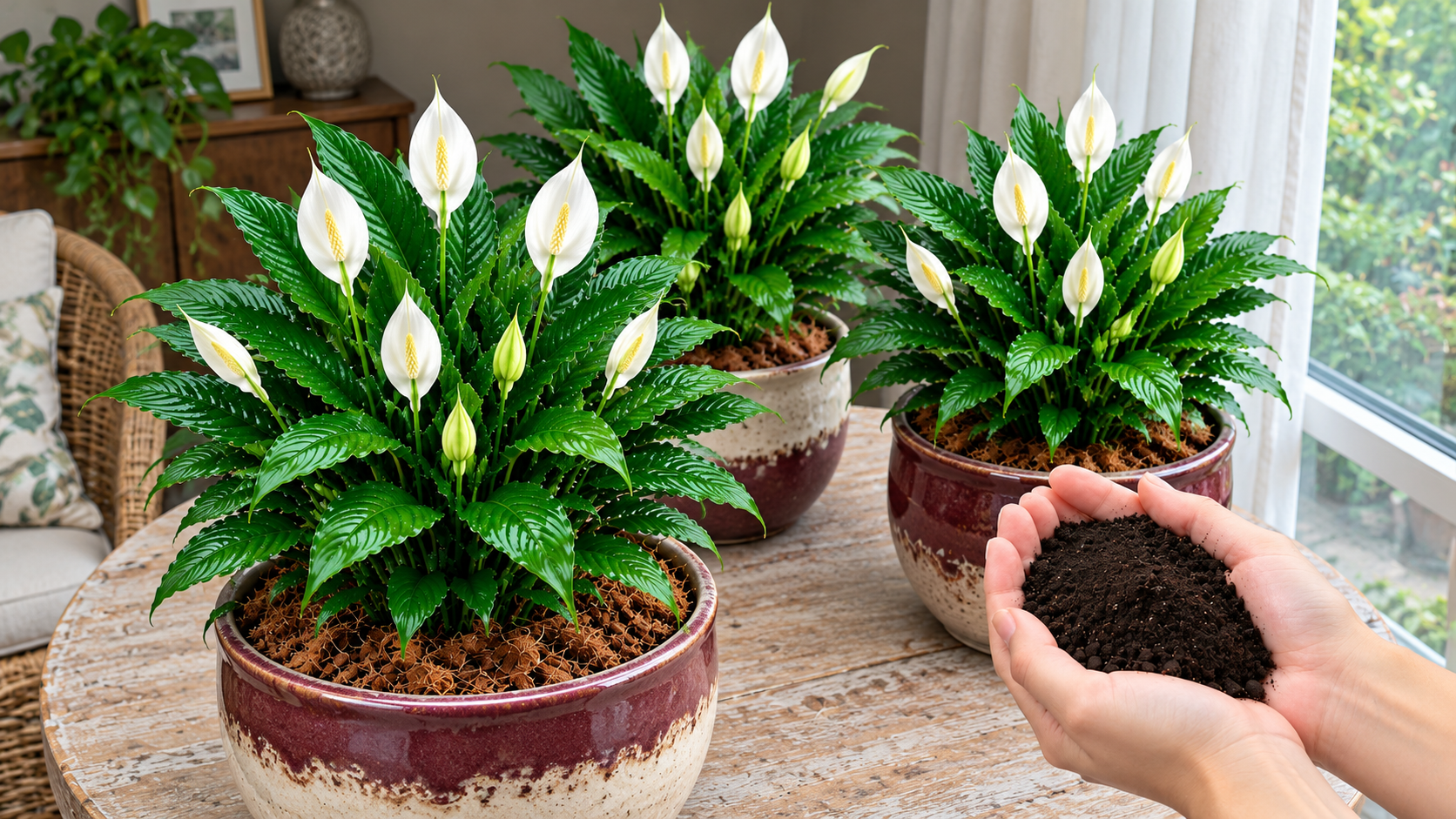
Just one cup per week! The steps that help your peace lily keep its beautiful flowers
Just one cup per week! The steps that help your peace lily keep its beautiful flowers
Bringing home a peace lily covered in white blooms is exciting. Keeping that fresh appearance is easier when you focus on the transition from the store to your home. The light is different, the air may be drier, and the pot may arrive wetter than expected. A fixed weekly cup of water cannot account for all of those changes.
The first goal is a healthy, settled plant. Existing blooms eventually age, but thoughtful care can prevent avoidable stress and support future flowering. Begin with the container, choose a suitable location, and use the plant’s actual moisture needs to guide watering. You can build a dependable routine without immediately repotting, fertilizing, or trying a homemade tonic.
Unwrap the plant and inspect the container
Remove transport sleeves and decorative coverings that trap water around the nursery pot. Look beneath the container before placing it on furniture. Foil or a close-fitting decorative sleeve can conceal standing water even when the top of the potting mix looks perfectly normal.
Check that the inner pot has drainage holes. If it sits in a decorative outer pot, lift it out and empty any collected water. Keep the two containers separate during watering so you can see what drains away. This small habit prevents a common problem from developing unnoticed.
Give the plant a calm arrival. Do not place it directly beside a heater to warm it after transport or in front of a strong fan to dry the foliage. A comfortable indoor location away from extremes is enough. Inspect for damaged leaves and visible pests before putting it among other houseplants.
Choose a place that can remain its home
Peace lilies grow best with useful light, even though they tolerate dimmer conditions. A bright spot with indirect light supports the plant more effectively than a distant dark corner. Avoid strong direct sun that can damage leaves or heat the pot quickly through glass.
Check the proposed location at different times of day. A gentle morning position can become harsh later, depending on the window. Curtains, nearby buildings, and seasonal changes also matter. The right place is the one that provides suitable conditions for most of the day, not just when you first set the plant down.
Keep leaves clear of cold windowpanes and away from heating or air-conditioning outlets. Repeatedly moving a flowering plant between rooms makes its water needs harder to predict. Once the location is suitable, let it settle instead of searching for a new spot every time a bloom changes color.
Make the first watering decision from the pot
A newly purchased plant does not necessarily need water immediately. Feel the surface and lift the inner pot. If the mix is still moist and the pot heavy, wait. If it is becoming dry and noticeably lighter, watering may be appropriate even if the label says a different day.
When you water, wet the root ball evenly and allow excess water to drain. Pour slowly across the surface rather than into a single hole. A cup can help you pour gently, but the quantity depends on the container and the moisture already present.
Check the outer pot after returning the plant. Remaining drips can collect below it, so empty them if necessary. Do not wait for dramatic collapse every time before watering. Repeated severe drying is avoidable, even though peace lilies often recover their posture after a thirsty spell.
Understand what the white parts are telling you
The white structure commonly called a flower is a spathe surrounding a central spadix. As it ages, it can change color and eventually dry. That natural progression does not automatically mean the plant needs more fertilizer, more water, or a larger pot.
Watch the whole plant alongside the blooms. If foliage remains healthy and new leaves develop, an aging spathe may simply have reached the end of its display. A sudden widespread decline, on the other hand, calls for a closer look at moisture, temperature changes, and the root environment.
Remove spent flower stalks when they no longer look attractive, using clean scissors close to the base without cutting nearby leaves. Do not pull firmly on a stalk to tear it out. Careful removal keeps the plant tidy without turning ordinary maintenance into a source of damage.
Avoid unnecessary repotting during the first days
A healthy peace lily does not require a new pot simply because it has arrived in a plain plastic one. First learn how its current mix behaves. Repotting can be useful when roots have very little room, drainage is poor, or the potting medium has deteriorated, but it should solve a specific problem.
Choose a container only moderately larger than the root ball when repotting is justified. Too much extra damp mix can make watering difficult to manage. Use an appropriate, airy houseplant mix and keep the plant near its previous planting depth.
Do not automatically divide a newly purchased flowering clump. Division changes the root system and can interrupt its settled appearance. If you later choose to make several plants, allow for recovery time and recognize that the smaller divisions may prioritize roots and leaves before producing new blooms.
Keep feeding gentle and understandable
Check whether the potting mix already contains fertilizer and whether the seller provided feeding information. A flowering plant has not necessarily exhausted its nutrients. Adding several products in the first week makes it difficult to know what the roots are receiving.
During active growth, use a suitable houseplant fertilizer according to its instructions. Measure and dilute it correctly. Concentrated fertilizer does not belong on an extremely dry root ball or damaged roots. Restore appropriate watering and assess the plant before adding nutrition.
Rice water, kitchen scraps, and herbal mixtures are not necessary to maintain peace lily flowers. Their composition is variable, so they are less predictable than a labeled product. Keep watering and feeding as separate decisions: inspecting weekly does not mean fertilizing weekly.
Maintain clean foliage and a comfortable room
Wipe dusty leaves with a soft damp cloth, supporting the leaf from below. Avoid oils and shine products. Cleaning is also an opportunity to check for insects, sticky residue, or unusual spotting. Use a clean section of cloth as you move through the plant.
Dry indoor air can contribute to unattractive tips, but browning has several possible causes. Review watering and fertilizer use before assuming humidity is the only issue. Spraying leaves every few hours does not correct a soggy root ball, and constantly wet surfaces are not a substitute for a suitable room environment.
Place the plant where children and pets will not chew it. Wash your hands after pruning or repotting. A safe, practical location should also be one you can reach for regular checks, so necessary care does not become awkward once the initial excitement wears off.
Follow the first month with a flexible routine
At each check, look at the mix, lift the pot, and inspect the bottom of the outer container. Water only if the observations support it. Make a short note when you do. After several cycles, you will have a clearer understanding of how the plant uses water in your home.
Take a photo every couple of weeks if you want to track changes. Count new leaves rather than judging only the number of white spathes. Existing blooms will not remain unchanged forever, and future flowering depends on the plant’s overall condition as well as its maturity and environment.
If several leaves suddenly droop, check moisture before reaching for the watering can. A dry root ball needs a different response from a wet one with damaged roots. This single pause to inspect often prevents the repeated overwatering that turns a small setback into a larger problem.
Questions about keeping a newly purchased peace lily attractive
Can the original blooms stay white indefinitely?
No. Each inflorescence ages, even with good care. Aim to maintain healthy foliage and a stable root system while enjoying the current display. Gradual color changes in old spathes are not a reason to keep increasing fertilizer.
Is one cup enough for a large plant?
It may not be. The useful measure is whether the root ball becomes evenly moist and excess water can leave. Let the size and condition of the pot determine the amount, not the convenience of using the same cup every time.
What should I do after the last bloom fades?
Remove spent stalks and continue appropriate light, watering, and feeding during growth. Do not put the plant in a darker place or stop caring for it because the display has ended. Healthy leaves and roots prepare the conditions for a later flowering cycle.
Further reading: Clemson Cooperative Extension, peace lily care