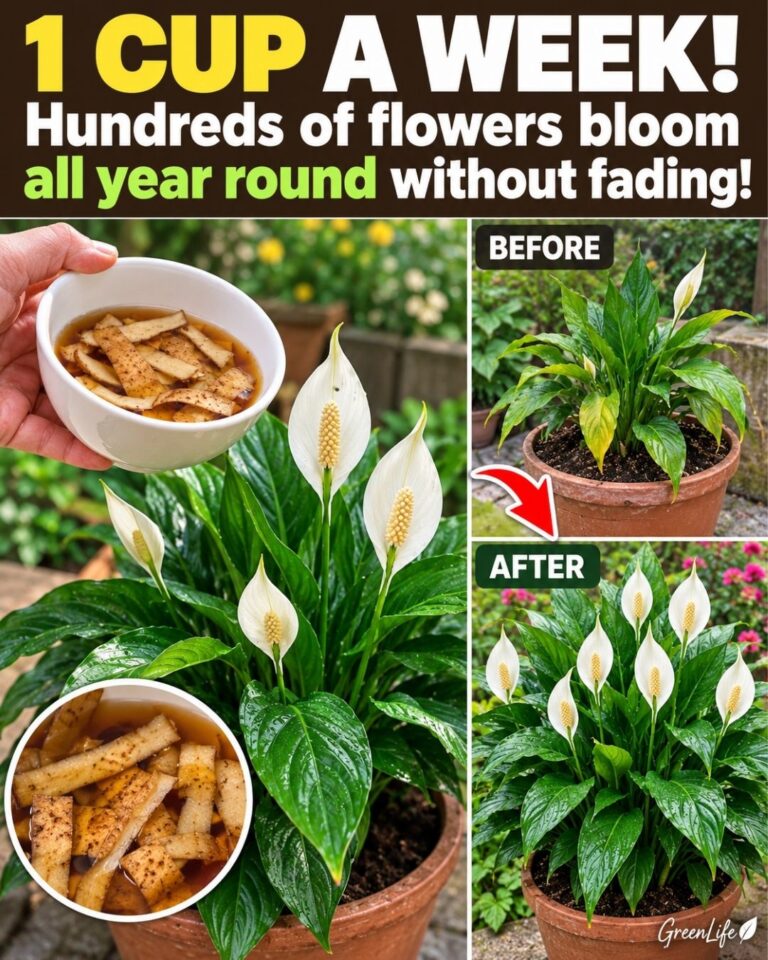
Make this small change! Give your peace lily another chance to bloom
A peace lily can produce attractive leaves for months without another white bloom. That does not automatically mean it needs a stronger fertilizer or a homemade tonic. Often, the most useful small change is improving the conditions in which the plant gathers energy, especially when it has been sitting in a dim corner.
To give your peace lily another chance to bloom, assess its light first, then review watering, drainage, and feeding. The aim is a healthy plant that can support future flowers. There is no reliable ingredient that makes every peace lily bloom on demand, but a clear care routine helps remove avoidable obstacles.
Understand the white blooms before troubleshooting
The prominent white structures are spathes, modified leaves surrounding the actual flower cluster. Their color and appearance change as they age. An older spathe may turn green and eventually brown, which is not by itself evidence that the plant lacks a particular nutrient.
Newly purchased peace lilies may arrive with a generous display produced under controlled growing conditions. Your home offers a different combination of light, temperature, and care. A pause after that display is not unusual and does not automatically call for an aggressive treatment.
Look at the whole plant. Firm green leaves and steady new growth suggest a different situation from yellowing, soft stalk bases, or a pot that never seems to dry. Address health problems first. Flowering should be a later goal for a plant that is actively declining.
Make the small change: improve a dark location
Peace lilies tolerate relatively low light, which makes them popular indoor plants. However, surviving in a dim place and producing regular flowers are different outcomes. If the plant is far from a window, try a brighter location with indirect daylight.
Observe the light throughout the day rather than judging the room at a single moment. Curtains, nearby buildings, balconies, and furniture can all reduce what reaches the leaves. The brightness you perceive while standing near a window may not match the conditions on a shelf across the room.
Move the plant gradually if it has spent a long time in shade. Strong afternoon sun through glass can damage its leaves. A sheer curtain or a position slightly beside the window can help provide useful light without intense exposure.
Give the new position time to work
Changing the location every few days makes the effect difficult to judge. Once you find a suitable place, keep the plant there and observe its development. Take a photo from the same angle periodically so you can identify new leaves and changes in overall growth.
A brighter position may also change the plant’s water use. Do not automatically keep an old watering interval that was established in a darker room. Check the potting mix more attentively during the transition and respond to its actual moisture level.
Keep the plant away from heating vents, cold drafts, and direct contact with cold window glass. Stable conditions help you distinguish the effect of improved light from unrelated stress. More light should not come at the cost of excessive heat or abrupt temperature changes.
Keep the root zone evenly managed
Check the upper potting mix and the weight of the container before watering. A peace lily generally prefers reasonably consistent moisture, with surplus water able to drain away. Repeated severe drying followed by prolonged saturation creates unnecessary swings.
When watering is needed, apply water evenly across the surface. Let the inner pot drain thoroughly and empty the saucer or decorative container. Water trapped underneath can keep the lower root zone wet even while the surface looks dry.
If leaves droop, inspect the soil before reacting. Dry roots and damaged roots in wet conditions can both result in limp foliage. That is why watering more often without checking can fail to improve the plant. Use several observations together rather than relying on one symptom.
Check whether the pot is helping or hindering
A functional pot has drainage holes and a size appropriate for the root system. A small plant in a large volume of moist soil may remain wet for a long time. Conversely, a severely crowded root ball can become difficult to water evenly.
Repot when there are clear reasons, such as deteriorated mix, severe crowding, or an unmanageable drying pattern. A lack of flowers alone does not prove that the plant needs a different container. Avoid disturbing healthy roots repeatedly in search of a faster result.
Use an appropriate houseplant potting mix that holds some moisture without staying waterlogged. Move up modestly in pot size when more space is needed. A layer of stones does not replace drainage holes or turn an unsuitable dense mixture into a good root environment.
Feed for healthy growth, not an instant display
A healthy, actively growing peace lily can benefit from suitable houseplant fertilizer. Follow the label for dilution and frequency. The fact that one product is used at a certain rate does not establish the rate for another product with a different concentration.
Check whether the potting mix already contains fertilizer, particularly after repotting. Avoid layering multiple products without understanding the total supply. More nutrients do not compensate for insufficient light and can cause problems if they accumulate in the pot.
Skip sugar water, milk, and unmeasured kitchen mixtures. They do not offer a predictable nutritional solution for flowering. If the plant is otherwise healthy but not blooming, review its environment and development instead of continually adding new ingredients.
Maintain the plant without removing useful foliage
Dust can be wiped away with a soft, slightly damp cloth. Support each leaf while cleaning it, and avoid pulling on the stalk. Do not coat the leaves with oil or household polish. A clean surface is enough.
Spent flower stalks can be removed with clean scissors when their appearance declines. Keep healthy green leaves, which continue supporting the plant. Cutting off vigorous foliage to encourage flowers is not an appropriate response to low light or root stress.
Use the cleaning session to look under leaves and around their bases. If you notice insects, sticky residues, or unusual damage, identify the problem before applying a treatment. A plant dealing with pests may need that issue addressed before its flowering performance becomes meaningful.
A realistic plan for the next growth period
- Photograph the plant and note the number of healthy leaves and existing blooms.
- Improve a clearly dim position gradually.
- Check moisture and drainage instead of watering by habit.
- Apply suitable fertilizer only when the plant is healthy and growing.
- Watch for new growth without repeatedly changing the routine.
Do not attach a guaranteed number of days to the plan. The plant’s age, condition, and previous flowering cycle affect the outcome. A healthy new leaf may be the first visible sign that the environment is more suitable, even before a flower stalk appears.
If the plant remains stable but does not flower, reassess the light and overall growing conditions. If it starts to decline, shift the goal to diagnosis and recovery. Keeping those situations separate helps prevent unnecessary feeding or repotting.
Frequently asked questions about peace lily flowers
Can a peace lily be healthy without flowers?
Yes. Leaves and roots can remain healthy between flowering cycles. A prolonged absence of blooms may prompt a review of the environment, but it does not automatically mean the plant is sick. Evaluate its overall development.
Does a tight pot force it to bloom?
A suitably sized pot is more useful than deliberately restricting the plant. Severe crowding can make watering difficult and contribute to stress. Repot based on the root system and mix condition, not on a promise that discomfort produces flowers.
Should I remove green spathes?
You may remove an aging flower stalk for appearance, but a green spathe can simply be part of the normal aging process. Its color alone does not justify a fertilizer change. Avoid cutting nearby healthy leaves while tidying.
Will misting trigger flowers?
No reliable flowering schedule follows from misting. A brief spray does not replace suitable light, healthy roots, or appropriate watering. Focus on those basics and avoid leaving foliage constantly wet in a poorly ventilated position.
Give the plant an opportunity, then observe
The useful small change is often a brighter, well-chosen location supported by consistent care. Keep the roots healthy, allow excess water to escape, and feed accurately when growth warrants it. That approach gives your peace lily a better basis for future blooms without promising an instant transformation. Keep it away from children and pets that might chew the foliage.